

Outdoor LED strip lighting usually fails for boring reasons. Water creeps past a silicone end cap that was never sealed properly. A driver rated for dry locations sits in an unvented box on a west-facing wall and cooks itself through two summers. 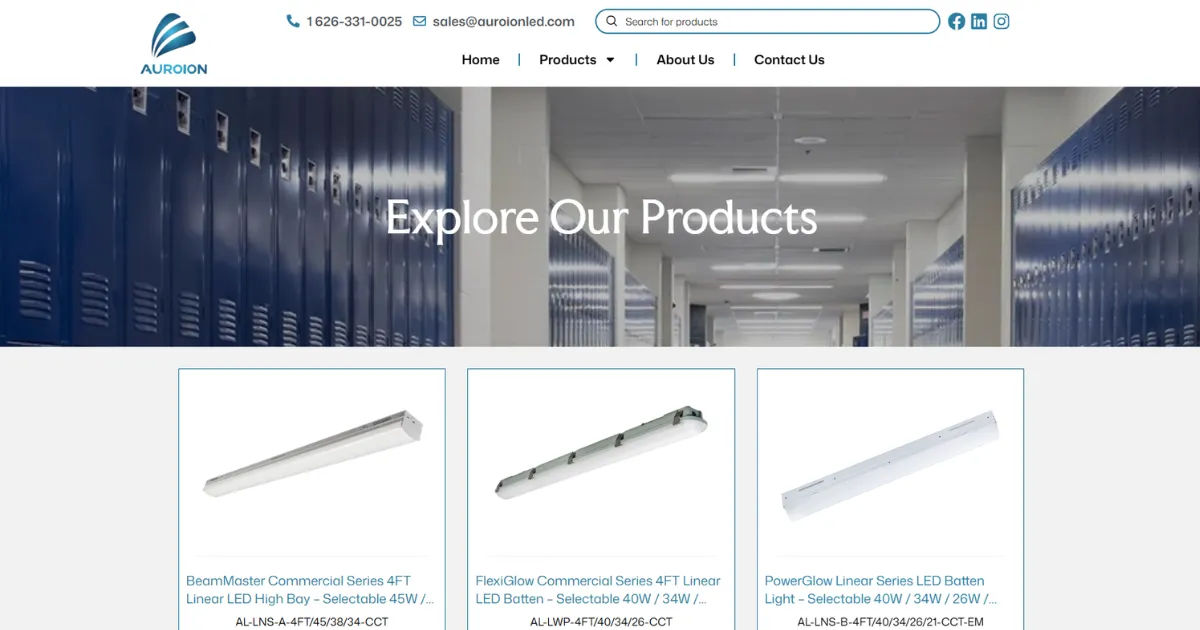 Somebody feeds 40 feet from a single point and the far end drifts two shades dimmer than the near end. None of that shows up in a product photo. All of it shows up eight months after handover, usually on the tenant’s complaint list.
If you are lighting a loading dock canopy, a parking garage soffit, a covered walkway or a building perimeter, most of the outcome is decided before anything gets mounted.
The IP Rating Tells You Less Than You Think
IP65 handles low-pressure water jets from any direction. That covers most soffit and canopy work where the strip never sits in standing water. IP67 survives temporary immersion, which matters at grade level, near planters, or anywhere a landscape crew will point a hose. IP68 is for continuous submersion and is genuine overkill for 90% of exterior commercial jobs.
The catch is that an IP rating applies to the extrusion, not to the joint you cut into it on site. The moment a strip is field-cut, that rating belongs to whoever reseals it. Order pre-terminated lengths where you can. Where you can’t, budget for proper end caps and marine-grade adhesive rather than the clear silicone tube in the van.
Run Length and Voltage Drop
Low-voltage strip on 24V DC starts showing visible drop somewhere between 16 and 20 feet on a single-end feed, depending on copper weight in the tape. Cheap tape with 1oz copper drops faster. The fixes are unglamorous: feed from both ends, inject power at intervals, or specify a 48V or line-voltage product where the run is long.
For continuous perimeter work over 50 feet, line-voltage strip is usually the better call. Fewer drivers, fewer failure points, less low-voltage cabling to route through a wall you’d rather not open again.
Drivers Are the Part That Dies First
Diodes tend to outlive everything around them. The driver is where exterior installs actually fail. Three things matter:
Location. Mount it somewhere serviceable and shaded. A driver in a sealed junction box in full sun runs 20-30°F hotter than its rating assumes, and electrolytic capacitor life roughly halves for every 10°C of extra heat.
Rating. UL Type HL or a wet-location listing, not a repurposed indoor unit.
Headroom. Load drivers to about 80% of rated capacity. Running them at 98% saves a few dollars and costs you a service call.
Colour Temperature and CRI Outdoors
For exterior commercial applications, 4000K reads clean and neutral without the blue cast that 5700K throws against concrete and brick. Save 5000K and above for security-driven areas where camera performance matters more than how the building looks.
CRI above 80 is enough for most exterior work. Push to 90+ only where colour identification genuinely matters — vehicle inspection bays, product loading, anywhere staff need to distinguish labels at night.
Mounting Details That Save You Later
Aluminium extrusion is not optional outdoors. It provides mechanical protection, gives the tape a heat sink, and makes the finished line look like architecture instead of a strip stuck to a wall. Use mounting clips rather than relying on adhesive backing alone — adhesive fails in freeze-thaw cycles, and it fails in a way that leaves the strip hanging.
Leave a service loop at every feed point. Someone will be back.
Choosing the right product for the environment matters more than any single spec on the datasheet, and a supplier that sells into commercial and industrial projects will usually steer you better than a general catalogue. Auroion LED, based in Pomona, California, stocks outdoor rated LED strip lighting for commercial buildings across a range of IP ratings and voltages, so you can match the fixture to the exposure instead of hoping one product covers everything.
Frequently Asked Questions
Can indoor LED strip be used outside if it’s under cover?
No. Even under a canopy, exterior strip faces condensation, humidity swings and wind-driven rain. Indoor tape has no conformal coating and no sealed housing, so moisture reaches the copper traces and corrodes them. Use a wet-location listed product rated IP65 or better.
How long should outdoor LED strip lighting last?
Quality tape rated L70 at 50,000 hours will hold usable output for roughly 11 years at 12 hours per night. The driver is usually the limiting component, with a realistic service life of 5-8 years outdoors depending on heat exposure and load.
What IP rating do I need for a parking garage soffit?
IP65 is sufficient for a covered soffit that never sees standing water. Move to IP67 if the area gets pressure-washed, sits below grade, or is within splash range of vehicle traffic during wet weather.
Is 24V or line-voltage strip better for long exterior runs?
Line-voltage is generally better beyond 50 feet. It removes voltage drop as a design constraint and cuts the number of drivers you have to mount, power and eventually replace. For short accent runs under 20 feet, 24V remains simpler and easier to dim.

Leave a Reply