

When a business needs a roof repaired, replaced, or installed, licensing is an important issue to investigate before signing a contract. The simple answer is that commercial roofing contractors are not required to hold the same type of license everywhere in the United States. 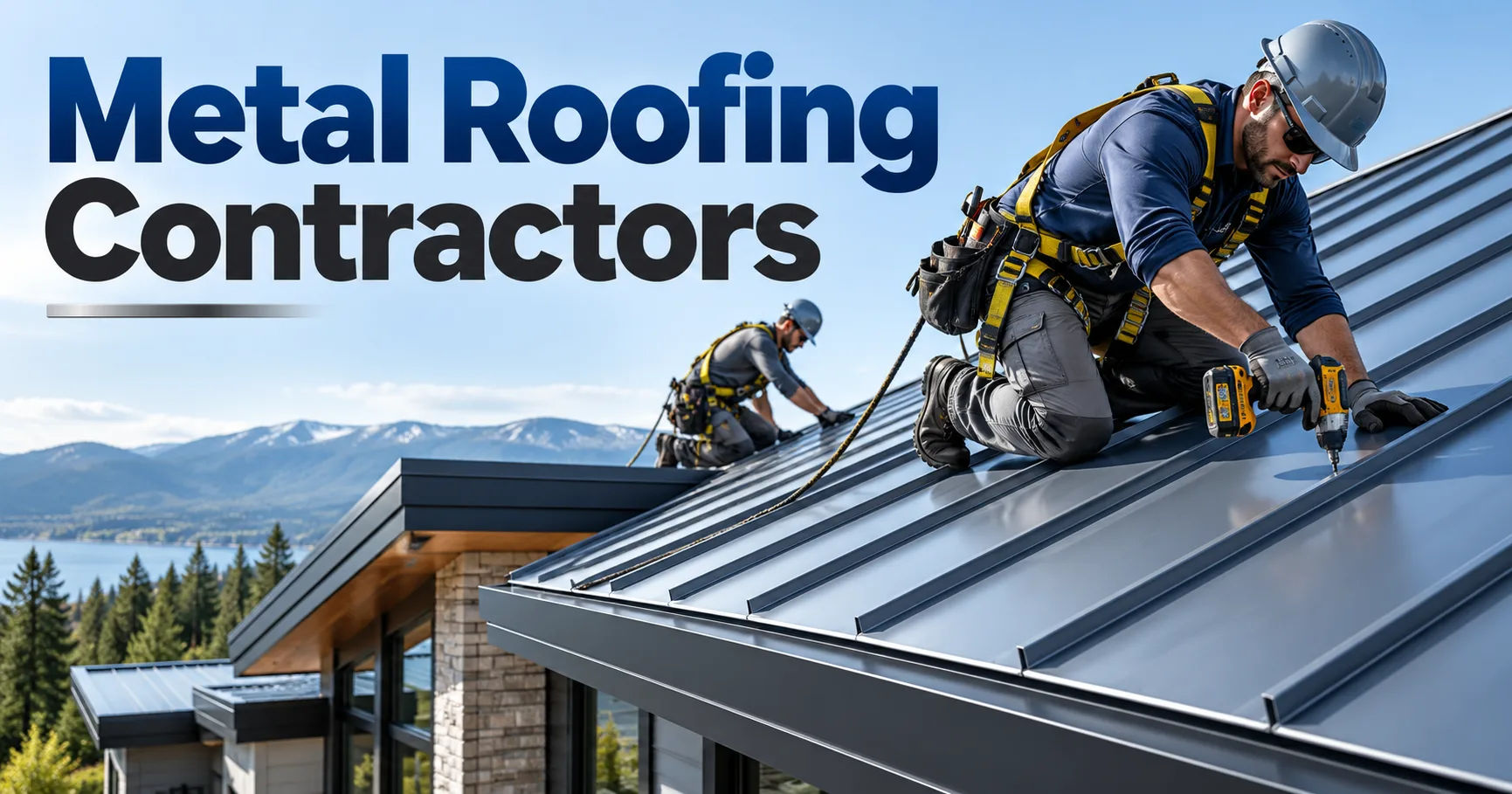 Licensing rules depend on the state, county, city, type of project, and sometimes the dollar value of the work.
That can make the question more complicated than it first appears. A contractor may legally perform commercial roofing work in one state without a statewide roofing license while needing a specialized license in another state. Some jurisdictions also require registration, insurance, bonds, permits, or local credentials even when there is no specific statewide roofing license.
Commercial roofing contractors therefore need to meet the requirements that apply where the project is actually being performed. A business owner should not assume that a contractor is properly authorized simply because the company has years of experience or a professional-looking website.
Understanding licensing, registration, insurance, permits, and verification can help you avoid expensive problems later.
Why Roofing Licenses Matter
A contractor license is generally intended to establish that a business or individual has met certain legal requirements before performing regulated construction work.
Depending on the jurisdiction, the licensing process can involve experience requirements, examinations, financial information, insurance, bonding, background checks, or other documentation. Requirements are not uniform across the country.
For commercial property owners, licensing can provide an additional way to verify that a contractor is operating within the applicable legal framework.
It is important to understand, however, that a license does not automatically guarantee excellent workmanship. Licensing and quality are related but different issues. A licensed contractor can still produce disappointing work, while licensing requirements themselves vary significantly from one location to another.
That is why licensing should be treated as one part of contractor due diligence rather than the only factor in a hiring decision.
Do All States Require Commercial Roofing Contractors to Be Licensed?
No.
There is no single nationwide roofing license that every roofer must obtain. Instead, individual states establish their own requirements, and some leave significant portions of contractor regulation to cities or counties.
For example, California requires roofing contractors to be licensed for qualifying work above its applicable threshold. Nevada requires a specific roofing contractor classification, while Oregon requires roofing contractors to obtain a contractor license. Utah also regulates roofing contractors through its state licensing system.
Other states take a different approach.
Texas, for example, does not have a statewide general contractor license for roofing contractors, although local requirements and other regulations can still apply. Pennsylvania also does not have a general statewide roofing license, but local requirements may exist. New York similarly relies heavily on local regulation for contractor licensing.
This means a contractor saying, "My state doesn't require a roofing license," may be correct while still needing a city or county registration.
State Licensing and Local Licensing Are Different
One of the easiest mistakes for a property owner to make is confusing state licensing with local licensing.
A state may not issue a specific roofing license, but the city where your commercial property is located could require contractor registration or another credential.
This is especially important for companies working across multiple cities. A contractor may be properly registered in one municipality but not automatically authorized to work in another.
Some jurisdictions also impose separate requirements for permits, business registration, specialty trades, or construction classifications.
Before hiring commercial roofing contractors, identify the exact location of the project and determine which authority regulates the work there.
What Does a Commercial Roofing License Actually Prove?
A license generally proves that the contractor has satisfied specific legal requirements established by the licensing authority.
The exact meaning varies.
In one state, a roofing license might demonstrate that the contractor has met experience and examination requirements. In another jurisdiction, registration may mainly establish that the business has provided required information and insurance.
Some licenses also have classifications or financial limits.
For example, North Carolina requires a general contracting license for qualifying projects valued at $30,000 or more, with different license levels based on project size. Virginia also uses different contractor license classes based on project value.
Consequently, seeing a license number is not enough. You should check what type of license it is and whether it covers the work being proposed.
Commercial Work Can Have Different Requirements
Commercial roofing is not always regulated in exactly the same way as residential roofing.
Commercial buildings can involve larger projects, complex roof systems, industrial equipment, mechanical penetrations, specialized materials, and substantial contract values.
Some jurisdictions therefore distinguish between residential and commercial construction classifications.
Rhode Island is one example where commercial roofing contractors are specifically required to obtain a state license. Louisiana also uses different licensing thresholds and classifications for commercial and residential construction work.
This is why a contractor who is authorized for residential work may not necessarily be authorized for a large commercial roofing project.
Does a License Mean the Contractor Is Insured?
Not necessarily.
Licensing and insurance are separate issues.
A contractor may need to provide proof of insurance as part of a licensing or registration process, but property owners should still request current insurance documentation.
Common types of coverage include general liability insurance and workers' compensation insurance.
General liability coverage can help address certain claims involving property damage or bodily injury caused by covered incidents. Workers' compensation generally addresses covered employee injuries according to applicable law.
The exact coverage requirements depend on the jurisdiction and circumstances.
When evaluating commercial roofing contractors, ask for certificates of insurance and verify that the coverage is current. If the contractor uses subcontractors, ask how those workers are insured as well.
What About Bonds?
Some contractor licensing systems require surety bonds.
A bond is different from insurance. Although the details depend on the type of bond and applicable law, a bond can provide a form of financial protection associated with specific obligations.
Some jurisdictions require contractors to maintain bonds based on their license classification or project size.
A commercial property owner should therefore ask whether the project requires bonding and whether the contractor meets that requirement.
Do not assume that every roofing company automatically carries a bond simply because it has been operating for years.
How Can You Check a Roofing Contractor's License?
The safest approach is to verify the contractor through the relevant government licensing or registration authority.
Many state agencies provide online license lookup systems.
For example, California's Contractors State License Board provides contractor license verification, while Nevada, Oregon, Utah, and several other states maintain their own contractor lookup systems.
When checking a license, compare the information in the official database with the information supplied by the contractor.
Look for the company's legal name, license number, classification, status, expiration date, and any applicable limitations.
If the license belongs to an individual rather than the company, determine whether that individual is legally connected to the contracting business under the jurisdiction's rules.
Do not rely exclusively on a screenshot or photocopy provided by the contractor. An official licensing database is a much better source for current status.
What Should You Ask a Commercial Roofing Contractor?
Before signing an agreement, ask direct questions.
You can ask:
"Are you licensed for this type of commercial roofing work?"
"What is your license number?"
"Which government agency issued the license?"
"Is the license currently active?"
"Does your license cover this project value and scope?"
"Can you provide current liability insurance documentation?"
"Do you carry workers' compensation coverage where required?"
"Will subcontractors be used?"
"Are permits included in your proposal?"
These questions are not unreasonable. A professional contractor should be accustomed to answering them.
A company that becomes evasive when asked for basic licensing or insurance information deserves additional scrutiny.
Are Permits the Same as a Contractor License?
No.
A contractor license authorizes or registers a contractor under applicable rules. A building or construction permit generally authorizes a particular project or scope of work under building regulations.
A project can require both.
For example, a licensed contractor may still need to obtain the appropriate permit before replacing a commercial roof.
Permit requirements can depend on the building, location, scope of work, structural changes, roofing materials, fire requirements, and local building codes.
The contractor should explain which permits are required and who will obtain them.
Never assume that "licensed contractor" automatically means "all permits are handled."
What Happens If an Unlicensed Contractor Does the Work?
The consequences vary by jurisdiction and situation.
An unlicensed contractor may face penalties, restrictions on collecting payment, enforcement action, or other legal consequences where licensing is mandatory.
The property owner can also face practical problems.
For example, an improperly authorized contractor may create complications with permits, inspections, insurance claims, warranties, or future property transactions.
The exact legal consequences depend on local law, so property owners should not rely on general internet advice when a dispute actually occurs.
If a project involves significant money, obtaining advice from the appropriate licensing authority or a qualified construction attorney can be appropriate.
Can a Commercial Roofing Company Be Licensed in One State but Not Another?
Yes.
Licenses are generally tied to the jurisdiction that issues them.
A company working in several states may need to satisfy different requirements in each state. It may also need local registrations depending on the cities or counties where it performs work.
For example, a contractor operating legally under one state's rules cannot simply assume that the same credentials automatically authorize work across a state line.
This is particularly relevant for regional and national roofing companies.
Before awarding a large contract, confirm that the contractor is properly authorized at the location of your property rather than relying on credentials from another state.
What Other Credentials Should You Consider?
Licensing is only one part of evaluating commercial roofing contractors.
Experience with the specific roofing system can also matter.
Commercial roofs can use systems such as single-ply membranes, modified bitumen, built-up roofing, metal roofing, coatings, and other assemblies.
A contractor experienced with one system may not have the same depth of experience with another.
Ask about completed projects similar to yours.
You can also request references from commercial property owners or facility managers who had comparable work completed.
Manufacturer training or certification may be relevant as well, especially when a roofing system's warranty depends on installation requirements.
These credentials do not replace legally required licensing, but they can provide additional information about the contractor's experience.
What Should Be Included in the Contract?
A commercial roofing contract should clearly explain what is being purchased.
The agreement should identify the property, scope of work, roofing system, materials, preparation requirements, warranties, payment terms, schedule, change-order procedures, cleanup responsibilities, and other important project conditions.
It should also identify who is responsible for permits and inspections when applicable.
A vague proposal can create disagreements later.
For example, "replace roof" does not necessarily explain whether insulation replacement, deck repairs, flashing, drainage improvements, curb work, disposal, or interior protection is included.
The more clearly the scope is written, the easier it becomes to compare proposals and manage expectations.
Does Licensing Guarantee Good Work?
No.
This distinction is worth emphasizing.
A license primarily addresses legal authorization or regulatory compliance. It is not a guarantee that a roofing system will be installed perfectly.
Quality depends on many factors, including project supervision, crew experience, materials, installation practices, weather conditions, preparation, inspections, and maintenance.
That is why property owners should evaluate several aspects of a contractor's qualifications.
Look at licensing, insurance, relevant commercial experience, references, written scope, warranty terms, safety practices, and communication.
A contractor should be evaluated as a complete business rather than by one credential alone.
Warning Signs to Watch For
There are several warning signs that deserve attention during the hiring process.
Be cautious if a contractor refuses to provide a license number where licensing is required.
Be equally cautious if the license information does not match the company's legal identity.
An unusually vague contract can also create problems.
Another concern is pressure to make an immediate decision without enough time to verify credentials.
Property owners should also investigate unusually large upfront payment demands, unclear insurance information, and proposals that omit important parts of the roofing system.
None of these signs automatically proves wrongdoing, but they justify asking more questions before committing to a major commercial project.
How Businesses Can Protect Themselves
The best approach is to verify important information before work begins.
First, determine whether the project requires a state or local contractor license.
Second, verify the contractor's license directly with the appropriate government authority.
Third, request current insurance documentation.
Fourth, check references for similar commercial projects.
Fifth, obtain a detailed written proposal.
Sixth, clarify permits, inspections, warranties, payment schedules, and change orders.
Finally, keep copies of the contractor's documents and communications.
These steps are relatively simple compared with the cost and disruption of resolving a major roofing dispute.
Questions to Ask Before Hiring
A commercial property owner can use a short checklist during contractor interviews.
Ask whether the company is legally authorized to perform the proposed work.
Ask whether its license covers commercial roofing and the project's size.
Ask for the license number and verify it independently.
Ask for current insurance certificates.
Ask whether subcontractors will perform any portion of the project.
Ask who will obtain permits.
Ask which roofing manufacturer and system will be installed.
Ask what warranty applies to workmanship and materials.
Ask for references from comparable commercial properties.
Finally, make sure all major promises are included in the written contract rather than relying on verbal assurances.
Conclusion
So, are commercial roofing contractors licensed? The answer depends on where the commercial property is located and what type of work is being performed.
Some states require specific roofing licenses, while others regulate contractors through broader construction licenses, registrations, or local requirements. In some states, there is no statewide roofing license, but cities or counties may impose their own rules. Current state-by-state guidance illustrates how different these requirements can be.
For that reason, a business owner should never assume that every roofing company follows the same licensing rules.
The most reliable approach is to identify the authority responsible for contractor regulation at the project location and verify the company's credentials directly. Check the license classification, status, scope, and expiration date where applicable.
It is also important to remember that licensing is not the same as insurance, bonding, experience, or workmanship quality. A responsible hiring process considers all of these factors.
When comparing commercial roofing contractors, look beyond the sales pitch. Verify legal authorization, confirm insurance, investigate relevant experience, review references, and insist on a detailed written contract.
Commercial roofing can represent a substantial investment, and the roof protects the building, equipment, inventory, employees, and business operations beneath it. Taking time to verify credentials before work begins can make the project easier to manage and reduce avoidable legal and financial complications.
Most importantly, licensing requirements should always be checked for the specific location and project because construction regulations can change and local rules can add requirements beyond statewide regulations.

Leave a Reply