

Turkish children's books can be a valuable resource for families who want children to maintain and strengthen their Turkish heritage language. For children growing up in a country where Turkish is not the main language, regular exposure to Turkish at home can sometimes become difficult. School, friends, entertainment, and daily activities may mostly happen in another language. As a result, children may understand Turkish but feel less confident speaking, reading, or writing it.
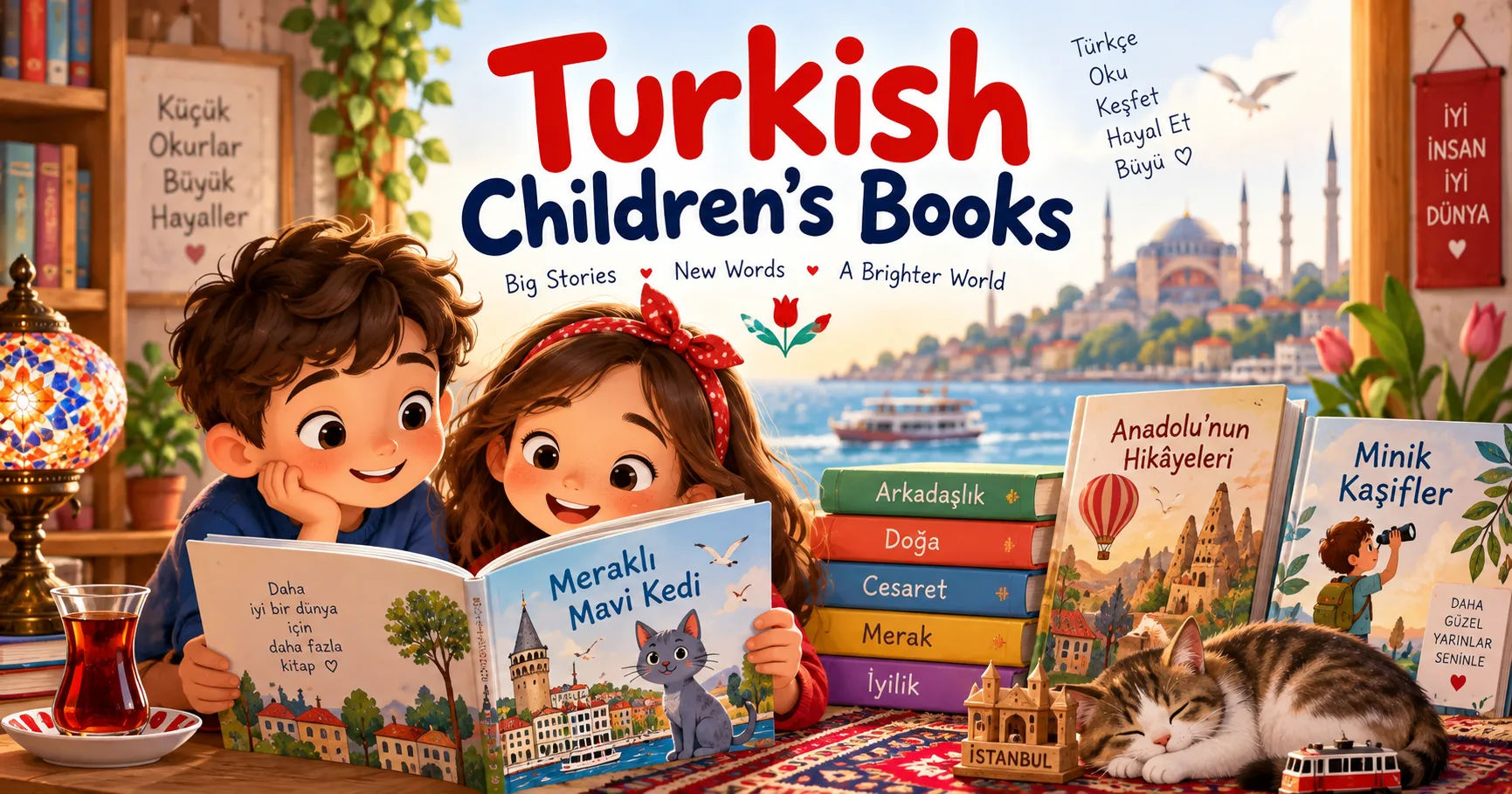
Books provide a simple and enjoyable way to bring Turkish into everyday life. Unlike formal language exercises, stories give children a reason to listen, read, ask questions, and communicate. They also introduce vocabulary and expressions in meaningful situations.
Heritage language learning is not only about memorizing words. It can help children stay connected to family members, cultural traditions, history, and their sense of identity. A well-chosen collection of Turkish stories can support all of these areas while making language practice feel natural.
What Is a Heritage Language?
A heritage language is a language connected to a child's family, community, or cultural background that may not be the dominant language in the child's wider environment.
For example, a child may live in Germany, the United States, the United Kingdom, or another country where Turkish is not the primary language. The child might hear Turkish from parents or grandparents while using the local language at school and with friends.
This creates a unique learning situation. The child may already recognize familiar Turkish words and expressions but may not have the same reading and writing skills as someone educated entirely in Turkish.
Heritage language development can therefore involve building on knowledge the child already has rather than starting from zero.
Why Books Matter for Heritage Language Learning
Books create repeated and meaningful exposure to language. A child can encounter the same words several times throughout a story, helping vocabulary become more familiar.
Stories also provide context. Instead of learning a word from a vocabulary list, children see how it is used by characters in a particular situation. This makes the meaning easier to understand and remember.
Books Provide Natural Language Exposure
Children need regular exposure to a language to develop comfort with it. Conversations at home are helpful, but they may use a relatively limited range of vocabulary.
A story can introduce words related to animals, nature, school, friendship, emotions, family, travel, food, and everyday activities. Over time, this expands the child's understanding of Turkish.
Turkish children's books are especially useful because the language is usually presented through situations that are understandable to young readers. The combination of pictures, characters, dialogue, and events gives children several clues about meaning.
Stories Make Language Memorable
A list of unfamiliar Turkish words can quickly become boring. A story, however, gives those words a purpose.
If a character is looking for a lost toy, for example, children may naturally learn words connected with searching, finding, asking questions, and describing objects. The vocabulary becomes associated with an event rather than existing as isolated information.
This can make language learning more memorable and enjoyable.
Supporting Vocabulary Development
Vocabulary is one of the most important parts of heritage language development. Children who use Turkish mainly at home may know words related to family and daily routines but have limited vocabulary for other subjects.
Reading can help close this gap.
Learning Words Through Context
Children can often understand an unfamiliar word by looking at the surrounding sentence, illustration, or actions of a character.
Parents do not need to translate every word immediately. Sometimes it is more useful to ask the child what they think a word means based on the story.
This encourages children to think in Turkish rather than automatically switching to their dominant language.
Repeated Words Become Familiar
Good children's stories naturally repeat important vocabulary. Repetition is useful because children may need to encounter a word several times before they feel comfortable using it themselves.
Reading the same favorite story more than once is therefore not a problem. In fact, repeated reading can strengthen vocabulary, pronunciation, sentence patterns, and comprehension.
Improving Turkish Reading Skills
Speaking and understanding a heritage language does not automatically mean that a child can read it confidently.
Some children grow up hearing Turkish from family members but have limited opportunities to read Turkish outside the home. Books can provide consistent practice.
Building Reading Confidence
Children can begin with short, illustrated stories and gradually move toward longer books.
The goal should not always be to finish a difficult book. A child should have opportunities to experience success while reading Turkish.
When children understand most of what they are reading, they are more likely to continue reading voluntarily.
Developing Sentence Awareness
Reading exposes children to complete sentences and different ways of expressing ideas.
They may notice how questions are formed, how conversations work, how descriptions are written, and how events are connected. This gradually strengthens their understanding of Turkish grammar without requiring every reading session to become a grammar lesson.
Strengthening Speaking Skills
Books can also encourage children to speak Turkish more often.
Parents can ask simple questions about the story, such as what happened, why a character behaved a certain way, or what the child would do in the same situation.
The child then has a meaningful reason to answer in Turkish.
Using Story Discussions
After reading a story, parents can discuss the characters and events together.
For younger children, questions can be simple. Older children can be encouraged to explain opinions, compare characters, predict endings, or describe how they would change the story.
These conversations help transform passive understanding into active language use.
Practicing New Expressions
Stories often contain expressions that children may not hear during ordinary family conversations.
Parents can repeat useful phrases from a story during everyday activities. If a book introduces a phrase related to being hungry, excited, surprised, or worried, that expression can later be used naturally at home.
This creates a bridge between reading and real communication.
Connecting Children With Turkish Culture
Heritage language is closely connected with culture. Children can learn about traditions, family relationships, food, celebrations, places, and social customs through age-appropriate stories.
This cultural connection can make Turkish feel like more than a school subject.
Learning Cultural References
A story may introduce traditional foods, Turkish names, celebrations, landscapes, or familiar social situations.
Children living outside Turkey may not encounter all of these things in their everyday environment. Books can give them an accessible way to explore these cultural references.
Parents can use these moments to share their own memories and experiences.
Building Family Connections
Books can also create opportunities for grandparents and other relatives to participate in language learning.
A grandparent might read a story with a child, explain an expression, or talk about a cultural reference. This turns reading into a shared family experience.
For heritage language learners, these interactions can be particularly meaningful because language becomes connected to relationships.
Choosing the Right Turkish Children's Books
Not every book will be equally suitable for every child. The best choice depends on age, Turkish ability, interests, and reading confidence.
Consider the Child's Language Level
A book that is far above a child's reading level may cause frustration.
Start with books that contain familiar vocabulary and clear illustrations. As the child's confidence increases, gradually introduce more complex stories.
For children who understand spoken Turkish but struggle with reading, illustrated books with short sentences can provide a useful starting point.
Choose Interesting Topics
Interest matters. A child who loves animals may be more willing to read a Turkish story about animals than a story about a topic they do not care about.
Fantasy, adventure, school stories, friendship, mysteries, science, sports, and humor can all provide opportunities for language development.
The important thing is to give children reasons to want to keep reading.
Making Reading Part of Daily Life
Consistency is often more useful than occasional long study sessions.
Families can establish a regular Turkish reading routine. This might involve reading before bedtime, during weekends, or at another convenient time.
Even a short reading session can provide valuable exposure when it happens regularly.
Read Together
Parents can read aloud while children follow the text.
This allows children to hear pronunciation while seeing how words are written. It can be particularly useful for children who are still developing their Turkish reading fluency.
Older children can take turns reading paragraphs or pages.
Let Children Choose Books
Giving children some control over what they read can increase motivation.
Parents can offer several appropriate options rather than selecting every book themselves. When children choose stories based on their interests, reading can feel like an enjoyable activity rather than an obligation.
Using Pictures as Learning Tools
Illustrations are not simply decorative. They can help children understand Turkish vocabulary.
Parents can point to objects and ask children to name them in Turkish. They can also ask children to describe what they see.
For example, instead of immediately translating a new word, a parent might point toward the relevant picture and ask, “Bu nedir?” This encourages the child to connect the Turkish word directly with the object.
Pictures can therefore support vocabulary learning without constant translation.
Balancing Turkish With the Dominant Language
Heritage language learning does not require children to avoid the language they use at school or with friends.
The goal is to create meaningful opportunities for Turkish alongside the dominant language.
Children may sometimes respond in another language even when a parent speaks Turkish to them. Parents can gently encourage Turkish without turning every conversation into a correction session.
A relaxed environment can help children associate Turkish with positive experiences.
Common Challenges and How Books Can Help
Heritage language learners may experience several challenges. They may understand Turkish better than they speak it, have difficulty reading, lack vocabulary, or feel that Turkish is less useful than the dominant language around them.
Books can address some of these challenges by providing regular exposure in a low-pressure environment.
When Children Prefer Another Language
If children prefer the language they use at school, parents can make Turkish reading more engaging.
Humor, interesting characters, interactive questions, and family discussion can make Turkish enjoyable. The purpose is to create positive associations rather than making children feel that Turkish is simply another academic responsibility.
When Reading Feels Difficult
Parents should avoid choosing books that are consistently too difficult.
It is completely reasonable to return to simpler stories. Familiar books can build confidence before children move toward longer and more challenging texts.
Audiobooks or parent read-aloud sessions can also provide additional Turkish exposure when independent reading is tiring.
Going Beyond Reading
Books can become the starting point for other language activities.
After reading a story, children can draw a favorite character and describe it in Turkish. They can retell the story, act out a scene, write a different ending, or create questions for another family member.
These activities connect reading with speaking, listening, writing, and creativity.
For older children, families can discuss the themes of a story and encourage them to explain their opinions in Turkish. This can help develop more advanced vocabulary and communication skills.
The Long-Term Value of Turkish Reading
Heritage language development is usually a gradual process. A child may not become fully fluent simply by reading a few books.
However, regular reading can contribute to a strong foundation.
Children can develop broader vocabulary, better reading comprehension, greater familiarity with grammar, and more confidence using Turkish. Just as importantly, books can help keep Turkish present in the child's everyday life.
Over several years, these small experiences can add up.
A child who regularly encounters Turkish stories may eventually become more comfortable reading longer texts and discussing more complex subjects in Turkish.
Conclusion
Using Turkish children's books for heritage language learning offers a practical way to combine language development with enjoyment and cultural connection. Books expose children to vocabulary, sentence structures, conversations, descriptions, and expressions that may not appear in everyday family conversations.
They can also strengthen reading skills and encourage children to speak Turkish when parents discuss stories with them. Pictures provide helpful context, while repeated reading allows important vocabulary to become familiar.
The cultural value is equally important. Stories can introduce children to traditions, names, places, customs, and perspectives connected to their Turkish heritage. Reading with parents, grandparents, or siblings can turn these experiences into meaningful family moments.
The most effective approach does not have to be complicated. Families can begin with books suited to the child's age and language level, allow children to choose topics they enjoy, and create a regular reading routine. Parents can discuss stories, explain unfamiliar expressions, and connect the content to everyday life.
Heritage language learning takes time, and every child's experience will be different. What matters is creating frequent, positive opportunities to encounter and use Turkish. With engaging stories and supportive family involvement, reading can become a natural part of that process.

Leave a Reply