

The pharmaceutical industry plays a vital role in protecting public health by ensuring that medicines reach patients safely and efficiently. However, medicines often travel through a complex network of manufacturers, distributors, wholesalers, pharmacies, hospitals, and other healthcare providers before reaching the people who need them. Keeping track of every product throughout this journey is essential for maintaining quality, preventing counterfeit medicines, and protecting patients. This is where pharmaceutical supply chain traceability becomes important. 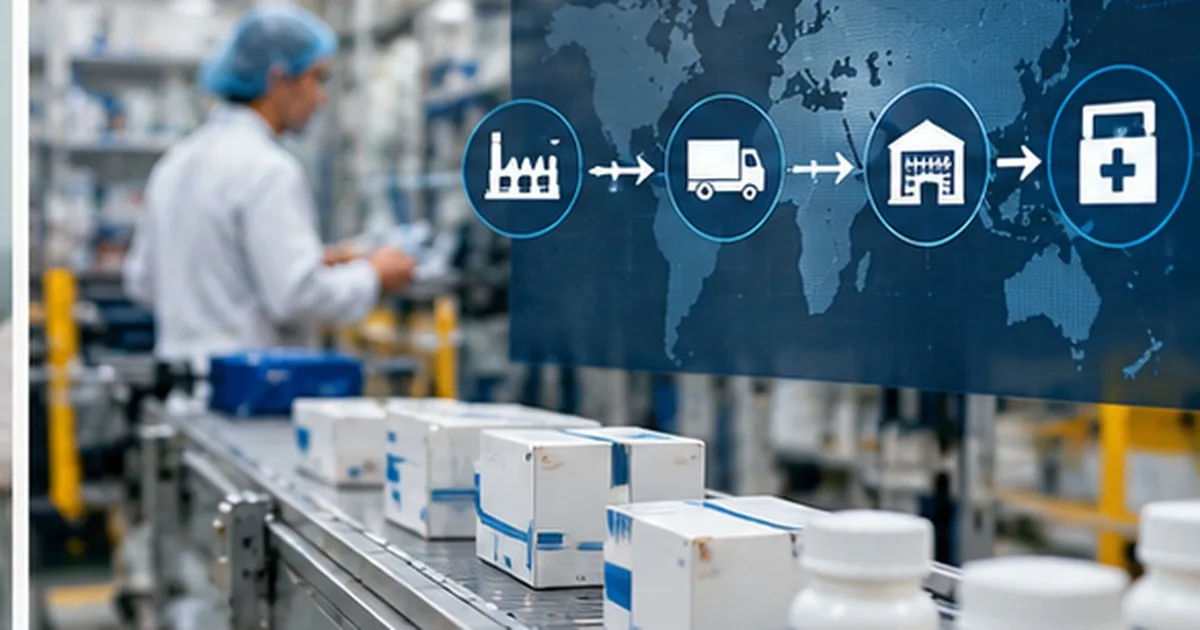 Understanding what is pharmaceutical supply chain traceability requires looking at how medicines are identified, monitored, recorded, and verified as they move between different organizations. Traceability allows authorized stakeholders to access information about a medicine's origin, production, storage, transportation, and distribution. It creates a reliable record of a product's journey, making it easier to identify problems and respond quickly when safety concerns arise.
In today's healthcare environment, traceability is more than a recordkeeping process. It is an important part of pharmaceutical quality management, regulatory compliance, inventory control, and patient safety. By using technologies such as barcodes, serialization, electronic records, and tracking systems, pharmaceutical companies can improve visibility across their supply networks and reduce the risks associated with poorly managed medicines.
This comprehensive guide explains pharmaceutical supply chain traceability, how it works, why it matters, which technologies support it, and how pharmaceutical organizations can implement effective traceability systems.
Pharmaceutical Supply Chain Traceability
Pharmaceutical supply chain traceability is the ability to track and verify medicines throughout their lifecycle, from the sourcing of raw materials to manufacturing, distribution, and delivery to the end user.
It involves collecting and maintaining information about products, batches, locations, transactions, and handling conditions. This information helps organizations establish where a medicine originated, where it has traveled, and which parties handled it along the way.
For example, a what is pharmaceutical supply chain company may manufacture a batch of antibiotics and distribute it to several wholesalers. Those wholesalers may supply hospitals and pharmacies in different locations. A traceability system records relevant product identifiers and transactions, helping authorized users follow the movement of each package or batch.
Traceability can operate at different levels. Some systems track entire batches, while more advanced systems identify individual saleable packages using unique serial numbers. The appropriate approach depends on regulatory requirements, product risks, and the organization's operational needs.
The Difference Between Tracking and Traceability
Tracking and traceability are closely related, but they are not exactly the same.
Tracking generally focuses on identifying a product's current location or monitoring its movement through the supply chain. For example, a distributor may use a logistics platform to determine whether a shipment is still in transit or has reached a warehouse.
Traceability provides a broader historical record. It helps establish where the product came from, which organizations handled it, what transactions occurred, and whether relevant quality requirements were maintained.
A tracking system might show that a medicine has arrived at a pharmacy. A traceability system can provide additional information about its manufacturer, batch number, distribution history, and verification status.
Both capabilities are valuable. When combined, they provide better visibility and support stronger pharmaceutical quality controls.
How Pharmaceutical Supply Chain Traceability Works
Traceability depends on accurate identification, consistent recordkeeping, and information sharing between authorized supply chain participants. Although systems vary, most follow several important steps.
1. Product Identification
The process begins by assigning identifiers to pharmaceutical products. These may include product codes, batch or lot numbers, expiration dates, and unique serial numbers.
A product code identifies the medicine and its packaging configuration. A batch number connects products to a particular manufacturing lot, while an expiration date indicates the period during which the medicine is expected to remain suitable for use under specified storage conditions.
Serialization adds a unique identifier to an individual package where required. This makes it possible to distinguish one package from another, even when both contain the same medicine and belong to the same batch.
Identifiers may be represented through barcodes, two-dimensional Data Matrix codes, or other approved identification methods.
2. Recording Manufacturing Information
Manufacturers create records that connect product identifiers with manufacturing activities.
These records may include production dates, raw material information, quality-control results, packaging details, and batch-release documentation.
The information helps establish the origin of a medicine and supports investigations if a quality issue is discovered later.
For example, if testing reveals contamination in a particular batch, the manufacturer can use production records to identify affected products and determine which distributors received them.
Accurate manufacturing records are therefore an essential foundation for reliable traceability.
3. Monitoring Distribution and Transfers
Once medicines leave the manufacturing facility, they may pass through several distributors, warehouses, and transportation providers.
Each relevant transfer should create a record showing which products moved, who transferred them, who received them, and when the transaction occurred. Depending on the system, records may also include shipment references, quantities, and verification results.
These records establish a chain of custody and help organizations detect unexplained movements or inconsistencies.
For instance, if a shipment is reported missing, transaction records can help determine its last confirmed location and identify the parties involved in its movement.
4. Verifying Products at Pharmacies and Hospitals
Before medicines are dispensed or administered, healthcare providers may verify product identifiers and check relevant records.
Depending on applicable requirements, this process may involve scanning a package, checking its serial number, confirming its status, or reviewing information about recalls and expiration dates.
Verification helps identify products that may be expired, recalled, duplicated, or otherwise unsuitable for distribution.
It is important to understand that a valid-looking barcode alone does not prove that a medicine is genuine. Effective verification depends on reliable data, appropriate authentication controls, and established procedures for investigating suspicious results.
5. Maintaining Records and Investigating Problems
Traceability information must remain accessible for the required retention period and be protected against unauthorized changes.
When a safety concern arises, authorized personnel can review available records to identify affected batches, trace distribution routes, and contact relevant recipients.
This information can support product recalls, regulatory investigations, and corrective actions.
A well-managed system makes it easier to move from a general concern to a clearly defined group of affected products.
Why Pharmaceutical Supply Chain Traceability Matters
Traceability offers several benefits to pharmaceutical companies, healthcare providers, regulators, and patients. Its importance extends beyond operational efficiency because it directly supports the safe handling and distribution of medicines.
Preventing Counterfeit Medicines
Counterfeit medicines may contain incorrect ingredients, insufficient amounts of active substances, harmful contaminants, or no effective medicine at all.
These products can expose patients to serious health risks and undermine trust in healthcare services.
Traceability helps organizations identify suspicious products by checking their identifiers and transaction histories. Serialization can make it more difficult for counterfeiters to introduce convincing copies into legitimate distribution channels.
However, traceability is not a complete solution by itself. It works best alongside supplier qualification, security controls, inspections, authentication procedures, and cooperation with regulators and law enforcement.
Improving Patient Safety
Patient safety is one of the most important reasons to establish traceability.
When a medicine is linked to reliable manufacturing and distribution records, organizations can investigate quality concerns more quickly. They can also identify affected products and communicate with the appropriate healthcare facilities.
This is particularly important when a medicine has been recalled or when storage conditions may have compromised its quality.
Better traceability can reduce delays in identifying affected products and help healthcare professionals make informed decisions about whether medicines should be quarantined, returned, or removed from use.
Supporting Faster Product Recalls
A pharmaceutical recall may be necessary when a product presents a safety risk, fails to meet quality specifications, or has labeling or packaging problems.
Without reliable traceability, a company may struggle to determine which customers received the affected products. It may respond by recalling a broader quantity than necessary or spend additional time investigating incomplete records.
Traceability helps identify affected batches, distribution destinations, and relevant transaction histories.
This can make recalls more targeted and efficient, reducing unnecessary disruption while helping ensure that potentially unsafe medicines are removed from circulation.
Strengthening Regulatory Compliance
Pharmaceutical companies operate under regulatory requirements designed to protect medicine quality and supply chain integrity.
These requirements vary by country and product category. They may address product identification, serialization, transaction documentation, record retention, verification, and reporting.
For example, the United States Drug Supply Chain Security Act establishes requirements intended to support the electronic tracing of certain prescription drugs through the US distribution system. The European Union has its own medicines safety framework, including safety features for applicable medicinal products.
A traceability system helps companies maintain the records and processes needed to meet relevant obligations. However, simply installing software does not guarantee compliance. Organizations must understand the laws that apply to their products and locations.
Technologies Used in Pharmaceutical Supply Chain Traceability
Modern traceability systems combine identification tools, digital records, and information-sharing technologies. The most suitable solution depends on the complexity of the supply network and the organization's regulatory obligations.
Barcodes and Two-Dimensional Data Matrix Codes
Barcodes are widely used to identify products and capture information efficiently.
Two-dimensional Data Matrix codes can store or represent several data elements in a compact space. Depending on the applicable standard, these elements may include a product identifier, serial number, batch number, and expiration date.
Scanning these codes reduces manual data entry and helps users retrieve relevant product information.
However, scanning equipment and software must be configured correctly, and product data must be accurate for the system to provide dependable results.
Serialization Systems
Serialization assigns a unique identifier to an individual package or another defined packaging level.
Unlike a batch number, which can be shared by thousands of packages, a serial number distinguishes a particular unit within a product's identification system.
Serialization supports package-level verification and can help detect duplicate identifiers, suspicious transactions, and products that do not match expected records.
It is especially important in markets where regulations require unique product identifiers and verification processes.
Radio Frequency Identification
Radio frequency identification, commonly called RFID, uses radio waves to identify tagged objects.
Depending on the technology and operating environment, RFID can allow multiple tagged items to be identified without scanning each label individually.
This capability may improve warehouse operations, inventory visibility, and shipment monitoring.
However, RFID requires suitable tags, readers, infrastructure, and data integration. Its cost and performance should be evaluated before implementation, particularly when packaging materials or environmental conditions affect signal reliability.
Cloud-Based Traceability Platforms
Cloud-based platforms allow authorized users to access traceability information through connected systems.
They can support data exchange between manufacturers, distributors, logistics providers, and healthcare organizations.
A centralized or connected platform can make it easier to manage product identifiers, review transactions, investigate discrepancies, and generate reports.
Strong access controls, encryption, monitoring, backup procedures, and clear data ownership arrangements are important for protecting sensitive business information.
Blockchain Technology
Blockchain is a type of distributed ledger that stores records in a structured way across participating systems.
In pharmaceutical supply chains, it may help multiple organizations share transaction records and establish a common history of product movements.
Its potential advantage is that authorized participants can maintain consistent records without relying entirely on one organization's database.
Nevertheless, blockchain does not automatically guarantee that the original information is correct. False data can still be entered, and organizations must address privacy, governance, interoperability, and system costs.
For many companies, a well-designed conventional database may provide sufficient traceability without the additional complexity of blockchain.
Internet of Things Sensors
Internet of Things sensors can monitor environmental conditions during storage and transportation.
Temperature sensors are particularly important for medicines that require controlled storage conditions, including certain vaccines and biologic products.
Some monitoring devices also record humidity, location, or other relevant environmental measurements.
When sensor information is linked to shipment records, organizations can investigate whether a product experienced conditions outside its permitted limits.
Sensors do not replace established quality procedures. Recorded excursions must be evaluated by qualified personnel to determine whether the medicine remains suitable for use.
The Role of Traceability in Cold Chain Management
Cold chain management is a specialized area of pharmaceutical logistics involving products that must remain within defined temperature ranges.
Certain vaccines, biologics, and other temperature-sensitive medicines may lose quality if exposed to unsuitable conditions for too long.
Traceability helps connect a product's identity and distribution history with environmental monitoring records.
For example, if a refrigerated shipment experiences a temperature excursion, the responsible organization can identify the shipment, review monitoring data, determine which products were affected, and investigate their destinations.
This information supports decisions about quarantine, additional testing, product release, or disposal.
Effective cold chain traceability requires calibrated monitoring equipment, clear handling procedures, trained personnel, and documented responses to temperature deviations.
Common Challenges in Pharmaceutical Supply Chain Traceability
Although traceability offers significant benefits, implementing it across a complex pharmaceutical network can be difficult.
Fragmented Data Systems
Different organizations may use separate software platforms, identification standards, and record formats.
When these systems cannot communicate effectively, information may become incomplete or difficult to reconcile.
Companies can address this challenge by adopting compatible data standards, establishing clear exchange procedures, and testing system integrations with their trading partners.
High Implementation Costs
Traceability may require investment in software, scanning equipment, serialization technology, employee training, cybersecurity, and ongoing maintenance.
Smaller manufacturers and distributors may find these expenses difficult to manage.
A phased implementation can help organizations prioritize essential requirements, evaluate results, and expand capabilities over time.
Cost planning should include both initial investment and long-term operating expenses.
Inaccurate or Incomplete Data
Even sophisticated systems can fail when employees enter incorrect information or fail to record important transactions.
Common problems include duplicated identifiers, missing shipment records, incorrect batch numbers, and delayed updates.
Organizations should establish data validation rules, audit procedures, staff training, and clear responsibility for record accuracy.
Regular reconciliation can help identify discrepancies before they create larger problems.
Cybersecurity and Data Privacy
Digital traceability systems may contain commercially sensitive information about products, suppliers, distribution routes, and business transactions.
Unauthorized access or system disruption can interfere with operations and compromise data integrity.
Companies should apply role-based access controls, secure authentication, encryption, monitoring, backups, and incident-response procedures.
Cybersecurity planning should also consider third-party software providers and connections between trading partners.
Global Regulatory Differences
Pharmaceutical companies that operate internationally may need to comply with different identification, reporting, verification, and recordkeeping requirements.
A system that satisfies one market's rules may not meet another market's requirements.
Organizations should map the regulations that apply to each product and destination, maintain updated compliance procedures, and consult qualified regulatory professionals when requirements are unclear.
How to Implement an Effective Traceability System
A successful implementation requires more than purchasing technology. It involves coordinating people, processes, data, and regulatory responsibilities.
Assess Current Supply Chain Processes
Begin by mapping how medicines move from suppliers to manufacturing facilities, warehouses, distributors, and customers.
Identify where product information is created, which records are maintained, and where visibility is limited.
This assessment helps determine which improvements will have the greatest impact.
Define Traceability Requirements
Establish what information must be recorded and which products require batch-level or item-level tracking.
Consider applicable laws, product risks, customer expectations, recall procedures, and environmental monitoring needs.
Clearly defined requirements prevent unnecessary spending and reduce the likelihood of missing essential capabilities.
Choose Suitable Technology
Select systems that can capture identifiers, record transactions, exchange data, and generate useful reports.
Consider compatibility with existing enterprise resource planning, warehouse management, and quality management systems.
The platform should support appropriate security controls and provide room for future operational growth.
Standardize Data and Processes
Create consistent procedures for product identification, shipment documentation, verification, and exception handling.
Ensure that suppliers and distribution partners understand their responsibilities.
Common data formats and agreed exchange procedures can improve interoperability and reduce errors.
Train Employees and Partners
Employees must understand how to scan products, record transfers, respond to alerts, and report discrepancies.
Training should cover routine activities as well as unusual situations, such as suspected counterfeit products, recalled batches, or missing records.
Organizations should evaluate whether training is effective and update it when processes or regulations change.
Test, Monitor, and Improve
Before full deployment, test the system using realistic scenarios.
For example, conduct a mock recall to determine how quickly the organization can identify affected products and locate recipients.
Monitor data accuracy, record completeness, system availability, and investigation times. Use these results to identify weaknesses and improve procedures.
Measuring the Effectiveness of Pharmaceutical Traceability
Organizations need measurable indicators to determine whether their traceability systems are working properly.
Useful performance measures may include:
-
Product identification accuracy: The percentage of scanned identifiers that match expected records.
-
Record completeness: The proportion of required transactions with complete documentation.
-
Recall response time: The time needed to identify affected products and their destinations.
-
Verification success rate: The percentage of verification attempts completed successfully, with exceptions investigated separately.
-
Data exchange reliability: The proportion of required transactions exchanged and reconciled successfully between systems.
-
Temperature excursion response time: The time taken to identify, assess, and document environmental deviations.
These measures should be interpreted carefully. For example, a high verification success rate does not necessarily prove that every medicine is genuine. Organizations should combine performance metrics with audits, risk assessments, and quality investigations.
The Future of Pharmaceutical Supply Chain Traceability
Pharmaceutical traceability continues to develop as digital technology, regulatory expectations, and supply chain risks evolve.
Greater interoperability may allow organizations to exchange information more efficiently across international networks. Improved analytics may help identify unusual transaction patterns and detect potential supply disruptions earlier.
Artificial intelligence could support anomaly detection by highlighting duplicate identifiers, unexpected shipment routes, or unusual transaction activity. However, such systems require reliable data, appropriate oversight, and human review of important decisions.
More advanced sensors may also improve monitoring of temperature-sensitive medicines, while digital platforms may simplify documentation and verification.
Despite these developments, technology alone cannot ensure pharmaceutical safety. Reliable traceability still depends on accurate records, responsible supply chain partners, effective quality management, and consistent regulatory oversight.
Organizations that invest in these foundations will be better prepared to respond to emerging risks and maintain confidence in medicine distribution.
Conclusion
Pharmaceutical supply chain traceability is an essential process for following medicines from their origins through manufacturing, distribution, and delivery to patients. It connects product identification, transaction records, verification procedures, and quality information to create a clearer picture of a medicine's journey.
Understanding what is pharmaceutical supply chain traceability helps healthcare organizations and pharmaceutical businesses recognize why reliable records and product visibility matter. Effective traceability supports counterfeit prevention, improves recall management, strengthens regulatory compliance, and helps protect patients from potentially unsafe medicines.
Technologies such as serialization, Data Matrix codes, RFID, cloud-based platforms, blockchain, and environmental sensors can improve traceability when they are implemented appropriately. However, their success depends on accurate data, compatible systems, trained employees, cybersecurity protections, and well-defined procedures.
Organizations should begin by assessing their current processes, identifying regulatory requirements, selecting suitable technology, and establishing consistent data standards. Regular testing, mock recalls, performance monitoring, and continuous improvement are equally important for maintaining reliable operations.
Ultimately, pharmaceutical supply chain traceability is not simply about knowing where a medicine is located. It is about establishing confidence in its identity, origin, handling history, and distribution record. By making product information more accessible and actionable, pharmaceutical companies and healthcare providers can strengthen supply chain integrity, respond more effectively to safety concerns, and help ensure that patients receive medicines that meet the required standards of quality and safety.

Leave a Reply