

When someone needs medical equipment for a limited period, buying every item outright may not make practical or financial sense. Recovery after surgery, temporary mobility problems, home-based treatment, or long-term care can all create a need for equipment that may only be used for a few weeks or months. 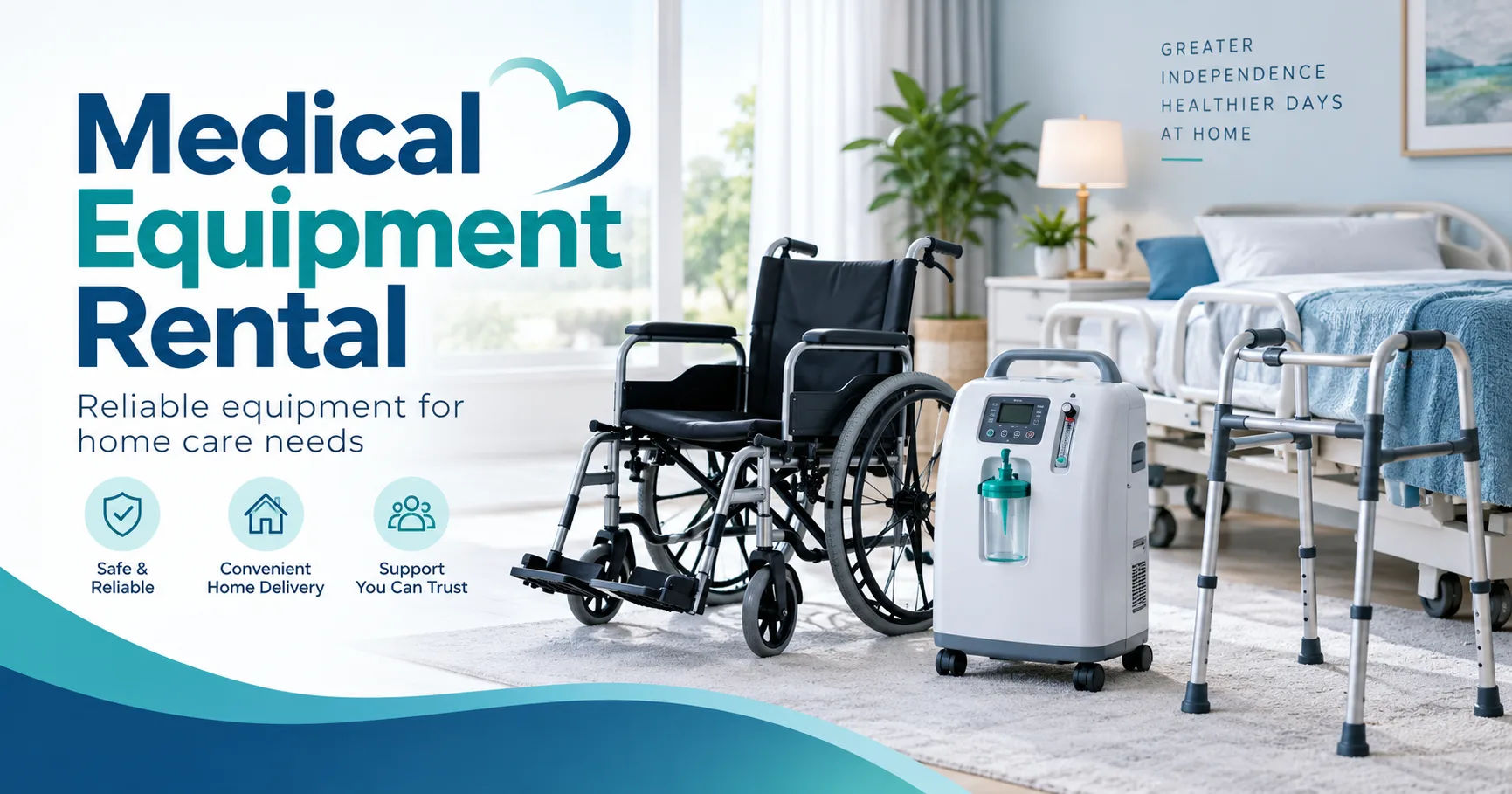 Medical Equipment Rental provides a flexible way to access essential devices without taking on the full cost and responsibility of ownership.
The equipment available through rental services can range from basic mobility aids to more specialized medical devices. What is included depends on the rental provider, the type of equipment, the patient's needs, and the rental agreement. Some providers offer delivery and setup, while others may include maintenance, replacement parts, user instructions, or technical support.
Understanding what you actually receive with Medical Equipment Rental can prevent unexpected costs and make home care much easier. Before signing an agreement, it is useful to know which equipment is available, what services are included, what you may need to arrange separately, and what responsibilities remain with you during the rental period.
What Does Medical Equipment Rental Usually Include?
A medical equipment rental service generally provides a specific piece of equipment for an agreed period in exchange for a rental fee. The arrangement may be short-term or extended depending on the patient's circumstances.
For example, a person recovering from knee surgery may need a wheelchair, walker, or hospital bed temporarily. Someone receiving care at home may need equipment for respiratory support or monitoring.
The rental package normally identifies the equipment being provided, rental duration, payment terms, delivery arrangements, and responsibilities for maintenance or damage.
The exact contents vary between companies, so it is important not to assume that every service includes the same extras.
Common Types of Equipment Available for Rental
Mobility Equipment
Mobility equipment is among the most commonly rented medical equipment. It can help people move around safely while recovering from an injury, illness, or surgical procedure.
Common examples include wheelchairs, walkers, rollators, crutches, and mobility scooters.
Some equipment is designed for indoor use, while other products are suitable for outdoor mobility. The correct choice depends on the person's physical condition, home environment, and expected duration of use.
Hospital Beds
Hospital beds can be useful for people who need extended bed rest or assistance with positioning at home.
Rental beds may include adjustable back and leg sections, height adjustment, side rails, and compatible mattresses. Some providers also offer overbed tables and other accessories.
The agreement should clearly state whether these accessories are included or rented separately.
Patient Lifts
Patient lifts are designed to help caregivers transfer individuals who have difficulty standing or moving independently.
Depending on the provider, rental options may include manual or powered lifts and compatible slings. The correct sling size and design are particularly important because improper equipment can create safety risks.
Caregivers should receive appropriate instructions before using lifting equipment.
Respiratory Equipment
Respiratory equipment can be rented when a patient needs temporary support or monitoring at home.
Depending on the clinical situation, this may include oxygen concentrators, oxygen-related accessories, nebulizers, or other respiratory devices.
Some respiratory equipment requires a prescription or medical authorization. Rental providers may also have specific procedures for setup, servicing, and emergency support.
Bathroom Safety Equipment
Bathrooms can become difficult or dangerous to use when someone has limited mobility.
Rental services may provide shower chairs, commode chairs, raised toilet seats, bath benches, and grab-bar-related equipment.
These products are particularly useful during short recovery periods because buying specialized bathroom equipment may not be worthwhile when it will only be needed temporarily.
Is Delivery Included?
Delivery is often available, but it is not automatically included in every rental agreement.
Some companies include standard delivery in the rental price. Others charge a separate transportation or setup fee.
Large equipment such as hospital beds, patient lifts, and certain respiratory devices may require professional delivery because they need to be positioned or assembled correctly.
Before arranging delivery, confirm whether the provider brings the equipment into the home, assembles it, tests it, and removes packaging.
It is also worth checking whether delivery is available to your exact location and whether additional charges apply for urgent, weekend, or after-hours delivery.
Does Setup Come With the Rental?
Setup is another service that can vary significantly.
Basic equipment such as crutches or a standard walker may require little or no professional installation. More complicated devices may need assembly, configuration, or safety checks.
If setup is included, ask what the service actually covers. A provider might assemble a hospital bed but not provide extensive training on every adjustment.
For equipment involving electricity, pressure, oxygen, lifting mechanisms, or other technical features, proper setup is especially important.
Are Accessories Included?
Accessories can make medical equipment significantly more useful, but they are not always part of the base rental price.
For example, a hospital bed may require a specialized mattress, bedside table, bed rails, or other accessories. A wheelchair might require a cushion, leg rests, or specialized supports.
A respiratory device may need tubing, masks, filters, or other consumable components.
Ask for an itemized description of everything included in the package. This makes it easier to compare providers and avoid discovering later that an essential accessory costs extra.
Maintenance and Repairs
Maintenance is one of the major advantages that can come with Medical Equipment Rental.
When equipment is rented rather than purchased, the provider may remain responsible for routine servicing and mechanical problems caused by normal use.
However, rental agreements differ. Some companies include repairs at no additional cost, while others charge for certain service calls.
The agreement should explain what happens if the equipment stops working. Find out who to contact, how quickly support is provided, and whether replacement equipment is available.
This is especially important when the equipment is essential to daily care.
Cleaning and Sanitization
Medical equipment should be appropriately cleaned before it is provided to another patient.
Rental providers generally have cleaning and sanitation procedures, but customers should still understand what happens between rentals.
Some items may be cleaned and disinfected by the provider. Other components, especially disposable or patient-specific items, may be supplied new.
During the rental period, the user may also be responsible for routine cleaning according to the manufacturer's instructions.
This distinction matters because cleaning responsibilities can affect both hygiene and the condition of the equipment.
Replacement Parts and Consumables
Not every component of medical equipment lasts for the entire rental period.
Some products use disposable or frequently replaced items. Examples can include filters, tubing, masks, batteries, protective materials, or other patient-specific supplies.
Some rental companies include these items, while others charge separately.
Ask whether consumables are included in the quoted price and how replacements are obtained. A low rental price may become less attractive if essential supplies are billed separately.
Training and User Instructions
Equipment should be used correctly, particularly when improper operation could cause injury.
Some rental companies provide written instructions, while others provide demonstrations during delivery.
More complicated equipment may require additional training for the patient or caregiver.
Do not rely entirely on a quick demonstration if you are uncertain about how something works. Ask questions before using the equipment independently.
If the equipment is prescribed for a particular medical purpose, follow the healthcare professional's instructions rather than changing settings or usage patterns on your own.
Technical Support
Technical support can be an important part of Medical Equipment Rental, especially when equipment is complicated or used frequently.
Support may be available by telephone, online communication, or through an emergency service depending on the provider.
Ask whether technical assistance is available outside normal business hours. A company that only provides weekday support may not meet the needs of someone who depends on the equipment every day.
It is also useful to know whether support is provided by trained equipment technicians or simply by general customer service staff.
Insurance and Rental Coverage
Payment for rented equipment can come from several sources, depending on the country, insurance policy, healthcare system, and specific medical need.
Some insurance plans may cover eligible equipment when certain requirements are met. Others may require prior authorization or documentation from a healthcare professional.
The rental company may assist with paperwork, but patients should confirm coverage directly with their insurer.
Ask about deductibles, copayments, rental limits, authorization requirements, and what happens when coverage ends.
If insurance does not cover the equipment, the provider should explain the private rental price and any additional charges.
What Happens When the Rental Period Ends?
The rental agreement should explain how and when the equipment is returned.
For some items, the provider arranges pickup. For smaller equipment, the customer may need to return it to a specified location.
Find out whether pickup is included in the original rental price.
You should also ask what happens if the equipment is returned late. Some providers may automatically extend the rental and charge additional fees.
If the patient still needs the equipment, it may be possible to extend the agreement. However, an extension should be arranged before the original rental period expires.
Damage, Loss, and Responsibility
Rental agreements normally distinguish between ordinary wear and damage caused by misuse, neglect, or accidents.
Normal use should generally be handled according to the provider's terms, but customers can be responsible for certain types of damage.
Before accepting equipment, inspect it and report existing damage. Taking photographs can also help document the condition when the equipment arrives.
Read the agreement carefully to understand your responsibilities if an item is lost, damaged, or stolen.
How to Choose the Right Rental Package
Choosing Medical Equipment Rental should begin with the patient's actual needs rather than simply selecting the cheapest package.
First, identify the equipment recommended by the healthcare professional. Then determine how long it is likely to be needed.
Consider the patient's mobility, strength, home layout, caregiver availability, and daily routine.
After that, compare providers based on the complete cost rather than the advertised rental rate alone.
Delivery fees, setup charges, deposits, accessories, maintenance, consumables, late fees, and pickup costs can all affect the final price.
A clear written agreement is preferable to relying on verbal promises.
Questions to Ask Before Renting
Before accepting equipment, ask the provider several practical questions.
Is delivery included? Is professional setup available? Are accessories included? Who handles repairs? Are replacement parts covered? What happens if the equipment fails? Is technical support available after hours? How is the equipment cleaned? What happens if the rental needs to be extended?
You should also ask about deposits, cancellation policies, return requirements, and damage charges.
Getting these answers in writing makes the rental arrangement easier to understand and reduces the chance of unexpected expenses.
Rental Versus Buying Medical Equipment
Renting is often useful when equipment is needed temporarily.
Buying may make more sense when a person has a long-term or permanent need and will use the equipment frequently.
The decision can also depend on insurance coverage, available storage space, maintenance requirements, and the cost of ownership.
For short-term recovery, rental can avoid the problem of purchasing expensive equipment that becomes unnecessary after the patient improves.
For long-term use, however, the total rental cost over many months or years may become substantial.
There is no single answer for every patient. The expected duration of use and the specific equipment should guide the decision.
Why the Rental Agreement Matters
The rental agreement is more than a payment document. It establishes who is responsible for delivery, maintenance, repairs, cleaning, replacement, and returns.
Read the agreement before signing it.
Pay particular attention to automatic renewal clauses, minimum rental periods, deposits, damage policies, insurance responsibilities, and cancellation procedures.
If something discussed with the representative is not included in the written agreement, ask for clarification before accepting the equipment.
Clear documentation protects both the customer and the rental provider.
Conclusion
Medical Equipment Rental can provide practical access to important equipment without requiring a patient or family to purchase products that may only be needed temporarily. Depending on the provider and equipment, a rental package can include mobility aids, hospital beds, patient lifts, respiratory devices, bathroom safety equipment, delivery, setup, maintenance, cleaning, technical support, and replacement services.
However, the word “included” should never be taken for granted. Rental companies structure their packages differently, and important accessories or services may carry separate charges. A careful review of the agreement can reveal the actual cost and responsibilities before the rental begins.
The most useful approach is to start with the patient's medical and practical needs, identify the equipment required, and then compare complete rental terms. Ask specifically about delivery, setup, accessories, repairs, consumables, technical assistance, insurance coverage, damage, and returns.
When these details are clear, renting medical equipment can be a straightforward way to support recovery, home care, mobility, and temporary medical needs while avoiding unnecessary ownership costs.

Leave a Reply