

Pinterest has become one of the most valuable platforms for discovering ideas, products, services, recipes, designs, and inspiration. For businesses, bloggers, online stores, influencers, and content creators, Pinterest can be a powerful source of long-term traffic. However, maintaining a consistent presence on the platform requires time and effort. This is where a Pinterest Automation Tool can make a significant difference.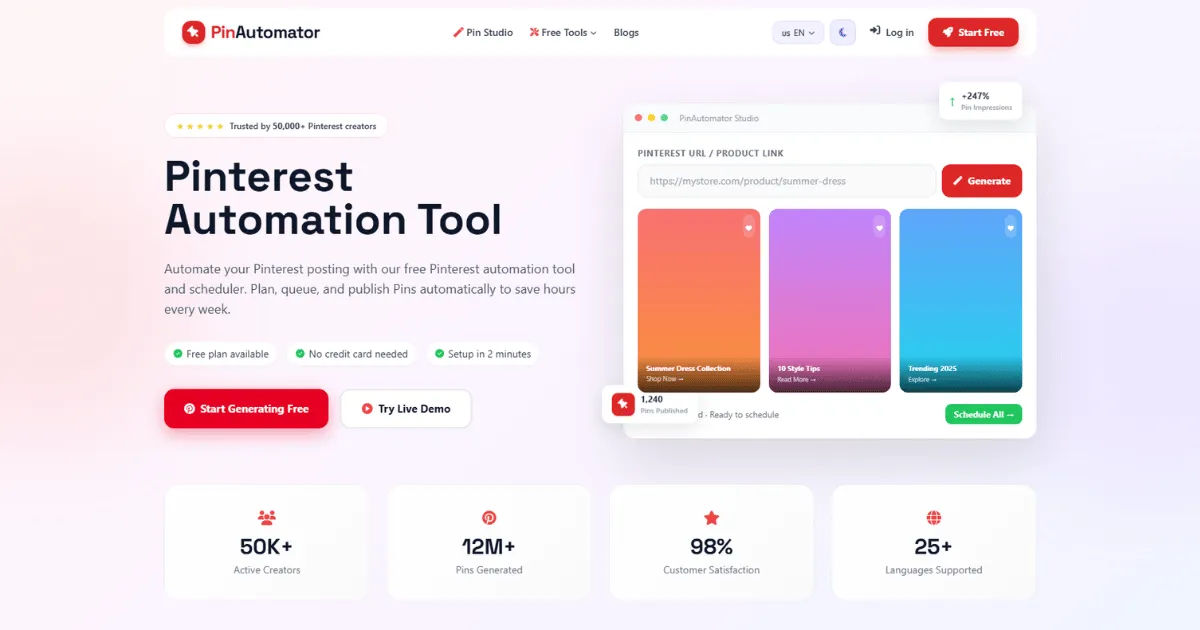
A Pinterest Automation Tool helps users manage repetitive Pinterest activities more efficiently. Depending on the software, it may help with scheduling pins, organizing content, managing publishing times, monitoring performance, and maintaining a consistent posting routine. Instead of manually handling every task, users can automate selected parts of their Pinterest marketing process.
The main benefit is not simply saving time. Automation can also help marketers build a more organized content strategy, maintain consistency, reach audiences at suitable times, and focus more attention on creating valuable content. When used correctly, automation can support a sustainable Pinterest marketing strategy without replacing the creativity and judgment needed for successful content.
Understanding the benefits of automation is important before choosing a tool or building a Pinterest strategy around it. The right approach can make Pinterest management easier while helping businesses use their time and resources more effectively.
Saves Valuable Time
One of the biggest benefits of a Pinterest Automation Tool is the amount of time it can save. Pinterest marketing often involves several repetitive activities. A marketer may need to upload images, write descriptions, add destination links, select boards, and schedule posts.
Performing these tasks manually every day can become tiring, especially for businesses with large content libraries. The more content a business creates, the more difficult it becomes to manage Pinterest alongside other marketing channels.
Automation reduces the need to repeat the same process manually. Instead of logging into Pinterest every time a new pin needs to be published, marketers can prepare content in advance and schedule it according to their strategy.
This allows users to spend less time on repetitive administrative work. The saved time can then be used for more valuable activities, such as creating better visual content, researching keywords, studying analytics, or improving website pages.
For a small business owner, saving even a few hours every week can be meaningful. For a marketing agency managing several accounts, the time savings can be much greater.
Time efficiency is especially useful for people who manage Pinterest as part of a broader digital marketing strategy. They may also be responsible for SEO, social media, email marketing, paid advertising, and content creation. Automation helps reduce the workload associated with Pinterest management.
Helps Maintain a Consistent Posting Schedule
Consistency is an important part of building an active presence on Pinterest. Creating one excellent pin and then disappearing for several weeks is unlikely to produce the same results as maintaining a regular publishing routine.
A Pinterest Automation Tool can help marketers prepare content ahead of time and maintain a consistent schedule. Instead of publishing content only when someone remembers to do it, businesses can establish a planned workflow.
For example, a blogger might create several articles in one month. Each article could have multiple visual pins designed for different topics or search terms. Rather than publishing all those pins at once, the marketer can distribute them over a longer period.
This creates a more organized content flow.
Consistency also makes content marketing easier to manage. When publishing is planned in advance, marketers do not have to constantly worry about what they should post next. They can create a content calendar and use automation to help execute it.
A consistent schedule can also make a brand appear more active and organized. However, consistency should always be combined with quality. Publishing frequently does not guarantee success if the content is irrelevant, repetitive, or poorly designed.
Makes Content Scheduling Easier
Scheduling is one of the most practical uses of automation. Without scheduling, marketers may need to manually publish content throughout the day or week.
This can be inconvenient when a business owner has other responsibilities.
A Pinterest Automation Tool can allow users to organize upcoming content and plan publishing times in advance. This means marketers can prepare content during their most productive hours while allowing the system to handle scheduled publishing.
For example, a business owner may have two hours available on Sunday to prepare Pinterest content. Instead of manually posting throughout the following week, they can prepare the content in one session and schedule it for future publication.
This approach creates a more efficient workflow.
Scheduling can also help businesses plan seasonal campaigns. A retailer promoting holiday products, for example, can prepare content ahead of time. A travel blogger can schedule destination-related content before a popular travel season begins.
Advance planning reduces last-minute pressure and gives marketers more control over their campaigns.
Supports Better Content Planning
Pinterest marketing becomes more effective when content is planned strategically. Randomly publishing pins without understanding the target audience can lead to inconsistent results.
A Pinterest Automation Tool can support a broader content planning system by helping marketers organize upcoming posts. Users can develop a publishing calendar based on their content categories, campaigns, and business goals.
For example, a food blogger may divide content into breakfast recipes, dinner recipes, desserts, and healthy meals. Instead of publishing only one category repeatedly, they can create a balanced schedule.
The same approach can work for an online fashion store. Content can be organized around seasonal collections, styling ideas, product categories, and shopping guides.
Planning makes it easier to maintain variety.
It also helps marketers think beyond individual pins. Rather than asking, "What should I post today?" they can ask, "What content should I publish over the next month to support my marketing goals?"
That change in perspective can improve the overall quality of a Pinterest strategy.
Reduces Repetitive Manual Work
Many digital marketing tasks are repetitive. Pinterest management is no exception.
Uploading content, selecting publishing times, organizing scheduled posts, and maintaining a content calendar can take considerable effort when handled manually.
Automation can reduce some of this repetitive work. This does not mean that marketers should remove themselves entirely from the process. Instead, they can automate routine activities while keeping control over important strategic decisions.
For example, a marketer can create the visual design and write the description manually. After reviewing the content, they can use automation to schedule the post.
This creates a balance between human creativity and technological efficiency.
The goal should not be to automate everything. The goal is to automate tasks that do not require constant human attention.
This approach allows marketers to focus their energy on activities where human judgment matters most.
Helps Marketers Manage Large Content Libraries
Businesses that publish content regularly may eventually have hundreds or even thousands of images and articles. Managing such a large content library can become difficult.
A Pinterest Automation Tool can make content management more organized, depending on the features it provides.
For example, a marketer may have a collection of blog posts that continue to attract traffic months or years after publication. Those articles may contain evergreen content that remains useful to Pinterest audiences.
Instead of forgetting about older content, marketers can include suitable evergreen material in their long-term Pinterest strategy.
This can help businesses make better use of existing content.
A large content library can become a valuable marketing asset when it is properly organized. Automation can help marketers distribute that content more efficiently while reducing the amount of manual work required.
Improves Workflow Organization
A successful Pinterest strategy usually involves multiple stages.
First, content must be created. Then images need to be designed. Descriptions and links need to be prepared. The content may then need to be reviewed, scheduled, published, and monitored.
Without a clear system, these tasks can quickly become confusing.
Automation can support a more organized workflow. Instead of handling everything at the last minute, marketers can create a repeatable process.
For example, a business might follow this workflow:
Create the article.
Design the pin.
Write the description.
Choose the destination link.
Add the content to the publishing calendar.
Schedule the pin.
Monitor performance.
This structured approach can make Pinterest marketing easier to manage.
It also makes it easier for teams to collaborate. If multiple people work on a Pinterest account, a clear workflow can help everyone understand their responsibilities.
Helps Businesses Stay Active During Busy Periods
Business owners often have periods when they cannot spend much time on social media marketing.
They may be traveling, working on product launches, managing customer service, or handling seasonal business demands.
During these periods, maintaining a regular Pinterest presence can become difficult.
Automation can help marketers prepare content before a busy period begins. Once the content is scheduled, the publishing process can continue according to the planned calendar.
This can be especially useful during holidays and peak business seasons.
For example, an online retailer may be extremely busy during a major shopping season. By preparing Pinterest content ahead of time, the business can continue promoting relevant products without requiring constant manual posting.
Automation does not eliminate the need for monitoring. Marketers should still review their accounts and respond to important changes. However, scheduled content can reduce the pressure of managing every post in real time.
Supports Evergreen Content Strategies
Evergreen content remains useful for an extended period. Examples include tutorials, how-to guides, educational articles, recipes, design ideas, and resource pages.
Pinterest is particularly suitable for content that people may discover long after it is originally published.
A Pinterest Automation Tool can help marketers incorporate evergreen content into a long-term publishing strategy.
Suppose a website has 100 useful articles. Some may continue to provide value months or years after publication. Instead of allowing those articles to disappear from the marketing strategy, marketers can continue promoting appropriate content over time.
This can increase the lifespan of existing content.
However, marketers should avoid simply repeating identical content without considering audience experience and platform guidelines. Evergreen strategies work best when content remains relevant and is presented thoughtfully.
Helps Reach Audiences at Different Times
Pinterest users are not all active at exactly the same time. Audiences may be located in different cities, countries, and time zones.
Scheduling can help marketers plan content for different publishing windows.
For businesses serving international audiences, this can be especially useful. A company may want to reach users in North America, Europe, and Asia. Publishing content at only one convenient time may not provide the best opportunity to reach every audience segment.
A Pinterest Automation Tool can make scheduling across different times easier.
The objective is not to publish constantly. Instead, marketers can test different publishing times and observe how their audience responds.
Analytics should guide these decisions whenever possible.
Makes Multi-Account Management More Efficient
Some marketers manage more than one Pinterest account. This may include agencies, businesses with multiple brands, or entrepreneurs operating several websites.
Managing multiple accounts manually can increase the workload significantly.
Automation tools that support multiple accounts can help centralize parts of the management process. Instead of treating every account as a completely separate workflow, marketers may be able to organize their activities more efficiently.
For agencies, this can improve productivity.
However, every account should still have its own strategy. A fashion brand should not necessarily use the same content strategy as a technology company. Automation should support individual strategies rather than encouraging identical content across accounts.
The more accounts a marketer manages, the more important organization becomes.
Supports Better Use of Marketing Resources
Marketing resources include more than money. Time, attention, creativity, and employee effort are also valuable resources.
When a team spends too much time on repetitive Pinterest tasks, fewer resources may be available for strategic work.
Automation can help shift the balance.
Instead of spending hours manually scheduling content, marketers can dedicate more time to research, creative development, website optimization, and audience analysis.
This can improve overall marketing efficiency.
For small businesses with limited staff, this benefit can be particularly important. A business owner may not have a dedicated social media manager. In such cases, automation can make it easier to maintain Pinterest marketing without requiring a large team.
Helps Marketers Focus on Creative Work
Automation is often associated with efficiency, but its greatest value may be the time it creates for creativity.
Successful Pinterest marketing depends heavily on visual presentation. Attractive images, useful ideas, strong headlines, and relevant content can make a significant difference.
Creative work requires attention.
If marketers spend most of their time performing repetitive administrative tasks, they may have less energy for developing new ideas.
By automating selected routine activities, marketers can focus more on designing better pins, researching audience interests, and developing valuable content.
Technology should support creativity rather than replace it.
A good strategy combines automation with human decision-making.
Makes Seasonal Marketing Easier
Many businesses depend on seasonal trends. Examples include holidays, weddings, travel seasons, back-to-school shopping, home decoration, and special events.
Seasonal campaigns often require advance planning.
A business that waits until a seasonal event is already underway may miss opportunities to reach people who were researching and planning earlier.
Automation can help marketers prepare seasonal content ahead of time.
For example, a home decor company may prepare seasonal inspiration content weeks before a major holiday. A fashion retailer can plan content around upcoming collections. A travel website can prepare destination guides before peak travel periods.
Advance scheduling allows marketers to build momentum around seasonal campaigns.
It also reduces the pressure of creating and publishing content at the last minute.
Helps Track and Improve Marketing Performance
Automation itself does not guarantee better results. Marketers still need to understand how their content performs.
Many modern tools provide some form of reporting or analytics integration, although available features vary between platforms.
Performance information can help marketers identify which content attracts attention and which content generates website visits.
For example, a marketer may discover that certain topics consistently perform better than others. They can then create more content around those successful themes.
Analytics can also help identify weak areas.
If a particular category receives little engagement, marketers can investigate possible reasons. The issue might be the topic, visual design, title, description, audience targeting, or timing.
The important point is that automation should support a cycle of planning, publishing, measuring, and improving.
Helps Build a Long-Term Marketing Routine
Many businesses struggle with consistency because they approach social media marketing as a series of individual tasks.
They post when they have time.
They stop when they become busy.
Then they start again when they remember.
This creates an inconsistent marketing routine.
A Pinterest Automation Tool can encourage a more structured approach. By planning content in advance, marketers can turn Pinterest into a regular part of their marketing system.
Long-term success often depends on sustainable habits rather than short bursts of activity.
A realistic schedule that a business can maintain for months may be more valuable than an aggressive strategy that becomes impossible to manage after a few weeks.
Automation can help make that sustainable routine easier to maintain.
Can Support Traffic Generation
Pinterest can be an important source of website traffic for businesses and content publishers.
When users discover a useful pin, they may click through to the linked website to learn more, read an article, explore a product, or complete another action.
Automation can support traffic generation indirectly by helping businesses publish content consistently and promote a larger selection of website pages.
However, it is important to understand that automation alone does not create traffic.
Traffic depends on many factors, including content quality, visual appeal, relevance, search optimization, audience interest, and the strength of the destination page.
Automation simply makes it easier to execute a strategy consistently.
If the underlying content is valuable and the Pinterest strategy is well planned, automation can help marketers distribute that content more efficiently.
Helps Promote Different Types of Content
Businesses often have more content than they realize.
A website may contain blog articles, product pages, landing pages, tutorials, guides, case studies, videos, and resource pages.
Pinterest can potentially help promote different types of useful content when the content is suitable for the platform.
Automation can make it easier to include a wider range of content in the publishing calendar.
For example, a digital marketing company might promote educational guides, while an online store might focus on product inspiration and buying ideas.
The key is to match the content with the interests of the target audience.
Automation should never become an excuse to publish irrelevant material.
Helps Reduce Last-Minute Publishing
Last-minute marketing often leads to mistakes.
When marketers are rushing to publish content, they may forget links, use weak descriptions, choose unsuitable images, or publish at inconvenient times.
Planning and scheduling can reduce this pressure.
With automation, marketers can prepare content when they have enough time to review it properly.
They can check the image, confirm the destination URL, proofread the description, and make sure the content fits the overall strategy.
This can improve quality.
Advance preparation also gives marketers the opportunity to create multiple variations of content and select the strongest options before publishing.
Encourages Strategic Repurposing
Content repurposing means using existing content in new formats or for new channels.
For example, one detailed blog article might inspire several Pinterest graphics. Each graphic could highlight a different idea from the same article.
Automation can help manage the distribution of these content variations over time.
Instead of creating completely new content for every Pinterest post, marketers can identify valuable existing material and develop multiple creative angles.
This can increase the efficiency of content production.
However, repurposing should be thoughtful. Different pins should provide genuine value and should not simply repeat the exact same message without purpose.
Supports Team Collaboration
Pinterest marketing may involve writers, designers, social media managers, and business owners.
When multiple people are involved, coordination becomes important.
Automation platforms with collaboration or workflow features can help teams organize tasks and publishing schedules, depending on the specific tool.
For example, a writer may prepare the content while a designer creates the visual. A marketing manager can then review the post before it enters the publishing schedule.
A structured workflow can reduce confusion and improve accountability.
This can be particularly valuable for agencies managing campaigns for multiple clients.
Can Improve Productivity for Small Businesses
Small businesses often operate with limited staff.
One person may handle marketing, customer service, operations, and administration. Finding time for consistent Pinterest marketing can be challenging.
Automation can help small businesses make better use of their limited time.
Instead of checking Pinterest repeatedly throughout the day, a business owner can dedicate a specific period to content planning and scheduling.
This creates a more manageable routine.
The business owner still controls the strategy, but technology handles selected repetitive tasks.
This can make Pinterest marketing feel less overwhelming.
Helps Create a More Scalable Strategy
A strategy that works for ten posts may become difficult when a business needs to manage hundreds of posts.
As businesses grow, their marketing systems need to grow with them.
Automation can provide a foundation for scaling Pinterest activities.
A growing company may expand its content library, add new product categories, enter new markets, or begin managing multiple accounts. A structured automation system can make it easier to handle increased volume.
However, scalability should never come at the expense of quality.
The goal should be to increase efficiency while maintaining strong creative standards and audience relevance.
What a Pinterest Automation Tool Cannot Replace
Although automation offers many advantages, it is not a complete replacement for human strategy.
A tool cannot automatically understand a brand's goals as deeply as a skilled marketer. It may also be unable to judge whether a topic is genuinely valuable to a specific audience without human input.
Marketers still need to conduct research.
They need to understand their audience, create useful content, design attractive visuals, and monitor performance.
Automation should handle repetitive processes, not eliminate strategic thinking.
A successful Pinterest strategy combines technology with creativity.
The best results usually come when marketers use automation as a support system rather than treating it as a shortcut to guaranteed success.
How to Choose the Right Automation Tool
Not every automation platform offers the same features. Businesses should consider their specific needs before selecting a solution.
One important factor is scheduling flexibility. Users should understand how far ahead they can plan content and how easily they can adjust their publishing calendar.
Account management is another consideration. Businesses managing multiple accounts may need features designed specifically for multi-account workflows.
Analytics are also valuable. Understanding performance can help marketers make better decisions over time.
Ease of use should not be ignored. A complicated tool may create more work rather than reduce it.
Users should also consider reliability, security, customer support, pricing, and compatibility with their existing marketing workflow.
The best tool is not necessarily the one with the most features. It is the one that solves the user's actual problems without creating unnecessary complexity.
Best Practices for Using Automation
Automation works best when it is used responsibly and strategically.
The first best practice is to prioritize quality. Every scheduled post should have a clear purpose and provide value to the audience.
The second is to avoid excessive repetition. Publishing the same content repeatedly without meaningful variation can reduce the quality of a marketing strategy.
The third is to monitor results. Marketers should review analytics and adjust their strategy based on real performance.
The fourth is to maintain a human presence. Automation should not prevent marketers from reviewing their accounts, responding when necessary, and staying aware of audience behavior.
Finally, businesses should remain familiar with Pinterest's current rules and recommendations. Platform policies and features can change, so marketers should regularly review official guidance and ensure that their practices remain compliant.
Common Mistakes to Avoid
One common mistake is assuming that automation guarantees success.
It does not.
Automation improves efficiency, but it cannot make poor content successful automatically.
Another mistake is scheduling too much content without a strategy. More posts are not always better. Relevance and quality matter.
Some marketers also ignore analytics. Without measuring performance, they may continue using strategies that are not producing meaningful results.
Another problem is forgetting to update old content. Links can become outdated, products can disappear, and information can change.
Regular reviews are therefore important.
Finally, businesses should avoid becoming completely dependent on automation. Technology can experience technical problems, platform rules can change, and marketing priorities can shift.
Human oversight remains essential.
Why Automation Is Valuable for Long-Term Pinterest Marketing
The strongest advantage of automation may be its ability to support long-term consistency.
Pinterest marketing is rarely about one post.
It is about building a library of useful, relevant, visually appealing content over time.
A consistent publishing system helps businesses continue contributing content while maintaining a manageable workload.
Automation makes this process more practical.
Instead of treating Pinterest as another daily obligation, marketers can build it into a larger content marketing workflow.
They can plan campaigns, prepare content, schedule publishing, analyze performance, and improve their strategy.
Over time, these small efficiencies can add up.
A business that saves several hours every week may have more time available for content creation, SEO, customer research, or product development.
That is why automation is often most valuable when viewed as a long-term productivity solution rather than a quick marketing trick.
Conclusion
The benefits of a Pinterest Automation Tool extend far beyond simply scheduling posts. Automation can help marketers save time, reduce repetitive work, maintain consistency, organize content, manage large libraries, and create a more sustainable Pinterest marketing workflow.
For small businesses, automation can make Pinterest marketing easier to manage with limited staff and resources. For agencies and larger companies, it can support more complex workflows and help teams manage greater volumes of content.
One of the most important advantages is consistency. Pinterest marketing often requires patience and continuous effort. By preparing and scheduling content in advance, businesses can maintain a regular presence without manually handling every publishing task.
Automation can also give marketers more time to focus on the areas that require human creativity and judgment. Designing better visuals, researching audience interests, creating valuable content, and analyzing performance are all activities that can benefit from the time saved through automation.
However, automation should not be viewed as a replacement for strategy. A tool cannot compensate for poor content, weak visuals, irrelevant topics, or an unclear marketing objective. The most effective approach is to combine automation with thoughtful planning, high-quality content, regular performance analysis, and ongoing human oversight.
When used properly, a Pinterest Automation Tool can become an important part of a modern content marketing system. It can help businesses turn Pinterest from a time-consuming task into a more organized and manageable channel for long-term marketing.
The real value comes from using automation intelligently. Marketers who understand their audience, create useful content, maintain quality, and use automation to handle repetitive work can build a more efficient and sustainable Pinterest strategy.
In the end, automation is most powerful when it gives marketers more freedom to focus on what technology cannot replace: creativity, strategy, originality, and genuine value for the audience.

Leave a Reply