
Embroidery can turn a simple logo, name, symbol, or illustration into a professional stitched design. However, embroidery machines cannot read ordinary artwork in the same way that people do. 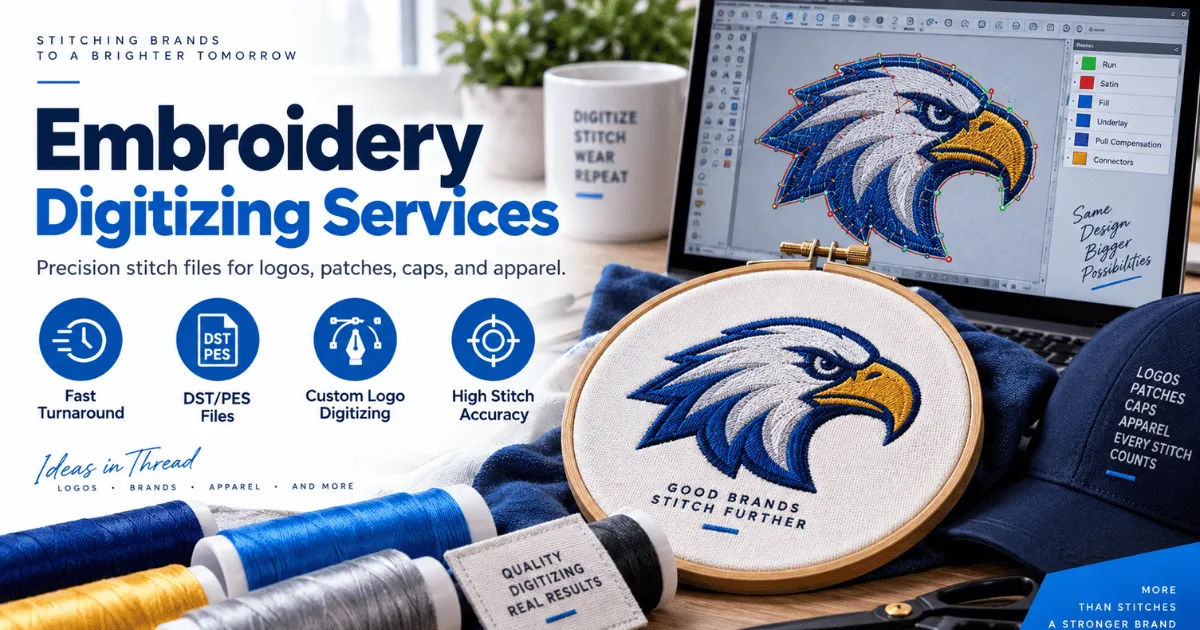 Before a design can be stitched onto fabric, it must be converted into a digital embroidery file that tells the machine exactly what to do. This is where custom embroidery digitizing services become important.
Artwork gives the digitizer a visual foundation for creating the embroidery design. It shows the shape, colors, lettering, proportions, and details that need to be reproduced with thread. Without suitable artwork, creating an accurate embroidery file can become much more difficult.
Understanding why artwork matters can help businesses, clothing brands, designers, and individuals get better embroidery results. Good artwork does not necessarily have to be a perfect vector file, but it should provide enough information for a digitizer to understand the intended design.
What Is Artwork in Embroidery?
Artwork is the visual representation of the design that a customer wants to turn into embroidery. It may be a company logo, school emblem, sports team symbol, product graphic, handwritten name, mascot, or another type of visual.
Artwork can come in many formats. Common examples include JPG, PNG, PDF, AI, EPS, and other digital image formats. A customer may also provide a photograph, scanned sketch, screenshot, or drawing.
The quality and type of artwork can affect the digitizing process. A clear image makes it easier to identify individual elements, while a blurry or low-resolution image may require additional interpretation.
It is important to remember that artwork and an embroidery file are not the same thing. Artwork is the visual reference, while the embroidery file contains instructions that control stitching.
Why Do Custom Embroidery Digitizing Services Need Artwork?
Artwork Shows the Intended Design
The main reason custom embroidery digitizing services need artwork is simple: the artwork shows what the finished design should look like.
A digitizer needs to know the exact shape and appearance of the logo or graphic before converting it into stitches. Without a visual reference, there is no reliable way to determine what the customer wants.
For example, imagine a business requesting an embroidered logo but providing only the company name. The digitizer would not know the exact font, symbol, spacing, colors, or proportions.
Artwork removes this uncertainty.
Artwork Helps Maintain Brand Accuracy
Businesses often depend on consistent branding. A logo may contain specific colors, shapes, fonts, and spacing that represent the company's identity.
When custom embroidery digitizing services receive the original artwork, they can use it as a guide to preserve those important characteristics.
This is especially useful when logos are embroidered on uniforms, caps, jackets, promotional products, bags, and corporate clothing.
Even a small change to a logo can make it look different from the original brand identity. Using accurate artwork helps reduce that risk.
Artwork Defines Shapes and Borders
Embroidery is created with stitches rather than printed ink. Therefore, a digitizer must understand where one design element ends and another begins.
Artwork provides this information.
For example, a logo might contain a circle surrounding text. The digitizer needs to determine the circle's outline, the lettering inside it, and the appropriate relationship between both elements.
Clear artwork makes these decisions easier and helps create cleaner embroidery.
What Happens to Artwork During Digitizing?
The digitizing process involves much more than simply converting an image into another file format.
A professional digitizer studies the artwork and decides how each section should be constructed with stitches.
Artwork Is Analyzed
First, the digitizer examines the design carefully. They look at the overall shape, colors, small details, lettering, outlines, and intended size.
They also consider where the design will be embroidered.
A logo for a jacket may be easier to reproduce than the same logo at a very small size on a cap.
Design Elements Are Separated
Next, individual components of the artwork are identified.
A design might include a background, text, border, icon, and several color areas. Each component may require a different stitch type or stitching sequence.
This separation allows the digitizer to build the design logically.
Stitch Types Are Selected
Different areas of artwork may require different stitch techniques.
Satin stitches are often useful for borders, lettering, and narrow shapes. Fill stitches can cover larger areas. Running stitches can create fine outlines or small details.
The digitizer chooses stitch types according to the shape, size, fabric, and desired appearance.
Stitch Direction Is Planned
Stitch direction also matters.
Changing the direction of stitches can influence how light reflects from embroidered thread. It can also affect the appearance and structure of different design sections.
Professional custom embroidery digitizing services plan stitch directions carefully instead of treating the artwork like a simple flat picture.
The Final File Is Created
After the design has been digitized, it is saved in an embroidery format compatible with the intended machine.
Common formats include DST, PES, EXP, JEF, and others.
The exact format depends on the embroidery machine being used.
Can Poor Artwork Affect Embroidery Quality?
Yes. Poor artwork can make digitizing more challenging and can increase the amount of interpretation required.
Blurry Images
Low-resolution images may have unclear edges. A digitizer may struggle to determine where one color ends and another begins.
This can become a problem when the design contains small lettering or detailed symbols.
Pixelated Logos
Pixelation can make curves and diagonal lines look uneven. A digitizer may need to manually reconstruct these elements before creating the embroidery file.
Incorrect Colors
If artwork uses unusual colors or has been altered by image compression, identifying the intended thread colors can become difficult.
Customers should provide brand color information whenever possible.
Missing Details
Sometimes a customer sends a partial logo or cropped image. Important design elements may be missing.
In such cases, the digitizer has to make assumptions or request a better reference.
Does Artwork Have to Be a Vector File?
Not always.
Vector artwork such as AI, EPS, or SVG can be extremely helpful because it generally provides clean, scalable shapes. However, raster images such as PNG or JPG can also be used as references.
Professional custom embroidery digitizing services can often work from many types of artwork.
The important factor is whether the artwork clearly communicates the intended design.
A high-quality PNG may be more useful than a poorly prepared vector file. Likewise, a clear PDF may provide better information than a complicated graphic with unnecessary effects.
What Makes Good Artwork for Embroidery?
High Resolution
A high-resolution image provides clearer edges and details. This makes it easier to understand the original design.
For logos, clean and sharp artwork is especially useful.
Clear Background
A simple background makes the actual logo easier to identify. If a design is shown on a complicated photograph, the digitizer may have difficulty separating the artwork from its surroundings.
Correct Proportions
The artwork should accurately represent the intended proportions of the design.
Stretching or compressing a logo can create problems during digitizing.
Readable Text
Text should be clear enough to identify the correct letters and font style.
This becomes particularly important when the embroidery will contain names, slogans, or small lettering.
Original Artwork
Whenever possible, customers should provide the original artwork instead of downloading a screenshot from a website or social media platform.
Original files usually contain more useful information.
Why Small Details Matter
One of the biggest challenges in embroidery is reproducing small details.
A printed design can show extremely fine lines. Embroidery thread, however, has physical thickness.
This means a detail that looks excellent on a computer screen may not work at a small embroidered size.
Professional custom embroidery digitizing services evaluate whether small details need to be simplified, enlarged, or adjusted.
For example, tiny text may need to be modified so that it remains readable after stitching.
The goal is not always to reproduce every pixel. The goal is to reproduce the recognizable appearance of the original artwork using thread.
Artwork Helps Determine Stitch Density
Stitch density refers to how closely stitches are placed within an embroidered area.
Too few stitches may leave gaps or make the design look weak. Too many stitches can make the fabric stiff, create excessive thread buildup, or cause puckering.
Artwork helps the digitizer understand how large each area is and what type of coverage is required.
The digitizer then adjusts stitch density according to the design and fabric.
This is one reason professional digitizing is different from basic image conversion.
Artwork and Different Garment Types
The same artwork may be used on different products, but the embroidery file may need adjustments.
A logo embroidered on a flat jacket panel may behave differently from the same logo embroidered on a curved cap.
Caps are particularly challenging because their surface is curved and structured.
Likewise, embroidery on stretchy shirts may require different considerations from embroidery on denim or canvas.
Therefore, custom embroidery digitizing services often need information about the final product in addition to the artwork.
Why Placement Information Can Be Important
Artwork tells the digitizer what the design looks like, but placement information tells them how and where it will be used.
Customers should provide the intended embroidery size whenever possible.
For example, a company logo might be intended for a left chest position, sleeve, hat front, jacket back, or bag.
Each location can create different requirements.
A design intended for a large jacket back may contain more detail than a small chest logo.
Artwork Helps With Resizing Decisions
Customers sometimes want one logo used at several sizes.
However, simply scaling an embroidery file up or down does not always produce good results.
When a design changes size significantly, stitch density, lettering, underlay, and other elements may need to be adjusted.
Original artwork gives the digitizer a reference for rebuilding or modifying the design appropriately.
This is another area where professional custom embroidery digitizing services can provide value.
Can a Digitizer Work From a Sketch?
Yes, in many cases.
A hand-drawn sketch can serve as useful reference artwork, especially when the design is unique and does not already exist digitally.
The digitizer may need to interpret the drawing and recreate its shapes digitally before planning stitches.
Customers should make sure that the sketch is as clear as possible.
If the design contains specific lettering, colors, or proportions, those details should be explained.
What If the Customer Has No Artwork?
This situation is common.
Some customers have only an idea in their mind. Others may have a rough drawing but no finished logo.
In these cases, the project may require design or artwork creation before digitizing can begin.
It is important to understand that graphic design and embroidery digitizing are related but different services.
Graphic design creates or prepares the visual artwork. Digitizing converts that visual design into embroidery instructions.
Some custom embroidery digitizing services may offer both capabilities, while others focus specifically on digitizing.
Artwork Reduces Miscommunication
Clear artwork also improves communication between customers and digitizers.
Instead of describing a design entirely with words, the customer can provide a visual reference.
This helps both sides understand the same objective.
For example, saying “make the blue darker” can mean different things to different people. Providing the original artwork and, when necessary, specifying the preferred thread color creates a much clearer instruction.
Better communication often leads to fewer revisions.
Why Professional Digitizing Is More Than Automatic Conversion
There are software programs that can automatically convert images into embroidery files.
However, automatic conversion does not always understand the physical behavior of embroidery.
A machine needs logical stitch sequences, appropriate densities, suitable underlay, proper compensation, and other technical instructions.
A professional digitizer evaluates these factors manually or with significant human control.
That is why custom embroidery digitizing services can produce better results when a design is complex, detailed, or intended for professional use.
What Customers Should Send With Their Artwork
For the smoothest process, customers should provide as much useful information as possible.
Helpful information may include:
-
Original artwork
-
Preferred embroidery size
-
Intended garment or product
-
Placement of the design
-
Preferred thread colors
-
Required embroidery file format
-
Special instructions about lettering
-
Whether the design needs to be suitable for caps, jackets, shirts, or other products
Providing these details gives the digitizer a clearer understanding of the project.
How Artwork Can Save Time and Money
Good artwork can reduce unnecessary revisions.
When a digitizer has a clear reference from the beginning, fewer assumptions are required.
This can shorten the preparation process and make communication more efficient.
It can also reduce the chance of producing a file that does not match the customer's expectations.
For businesses ordering embroidery in larger quantities, avoiding repeated corrections can be particularly valuable.
Artwork Is the Blueprint for Embroidery
A useful way to understand the relationship is to think of artwork as a blueprint.
A blueprint gives a builder the information needed to construct something accurately.
Similarly, artwork gives the digitizer the visual information needed to construct an embroidery file.
The embroidery file then translates that design into instructions that an embroidery machine can follow.
Without a clear blueprint, the process becomes much more uncertain.
PSA Digitizing makes the process of preparing artwork for embroidery simple and convenient. As a professional embroidery digitizing company, it converts logos, artwork, and custom designs into embroidery-ready formats such as DST, PES, and JEF. The company is based in Clarkston, Georgia, USA, and uses a combination of experienced craftsmanship and modern digitizing software to create files that are accurate and ready to stitch.
The service has earned a 4.5+ star rating on Trustpilot and is trusted by both embroidery professionals and hobbyists. Customers can request logo digitizing, custom patch designs, and machine embroidery files according to their project requirements. By focusing on quality, quick turnaround, and reasonable pricing, PSA Digitizing aims to provide a smooth customer experience. Visit psadigitizing.com to submit your artwork.
Conclusion
Artwork is an essential part of the embroidery digitizing process because it provides the visual foundation for the entire project. It tells the digitizer what the design should look like, including its shapes, colors, lettering, proportions, and important details.
Although artwork does not have to be perfect in every situation, clear and accurate artwork makes the job easier and helps reduce mistakes. High-resolution logos, original files, readable text, and accurate colors can all contribute to better results.
It is also important to remember that artwork is not the same as an embroidery file. A JPG, PNG, PDF, or vector graphic shows the design visually, while an embroidery file contains technical stitching instructions. Turning one into the other requires decisions about stitch types, density, direction, sequencing, underlay, compensation, and other embroidery factors.
The final product also matters. A design intended for a cap may require different treatment from one intended for a jacket or shirt. Size, fabric, placement, and surface shape can all influence how the artwork should be digitized.
For this reason, customers should give custom embroidery digitizing services the clearest artwork and project information available. Even when the original design is only a sketch, providing a strong visual reference can help the digitizer understand the intended result.
Ultimately, artwork acts as the communication bridge between the customer's idea and the finished embroidered product. The better that bridge is, the easier it becomes to create an embroidery file that looks professional, stitches properly, and represents the original design effectively. By supplying accurate artwork and useful production details, customers can make the digitizing process smoother and improve their chances of achieving clean, attractive, and durable embroidery.