

Installing new tile flooring is an excellent way to improve the appearance, durability, and value of your home. However, once the installation is complete, one important question comes to mind: When is it safe to walk on the new floor? Understanding the correct waiting period is essential because walking on freshly installed tiles too soon can cause movement, uneven surfaces, loose tiles, or damage to the grout. 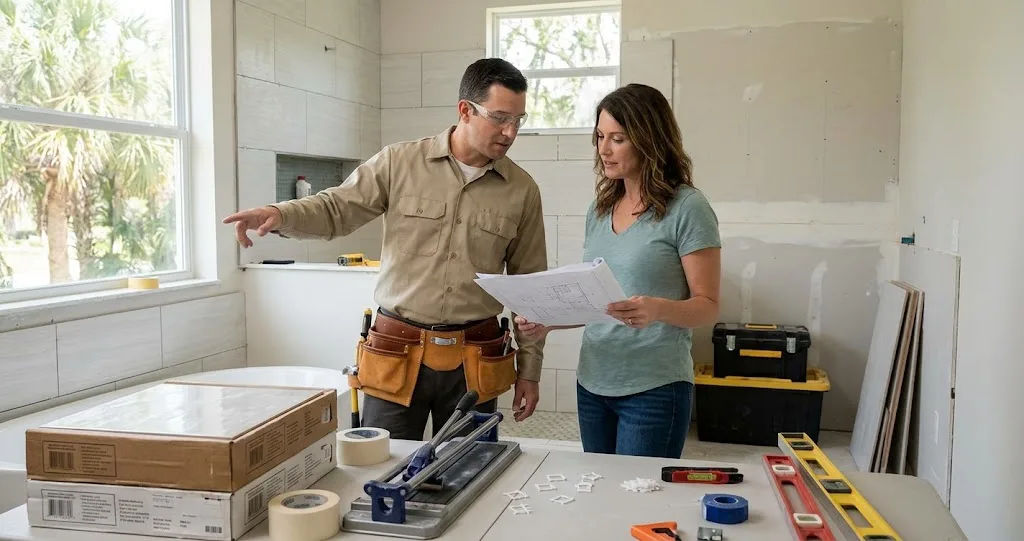 If you have recently scheduled or completed tile installation Jacksonville FL, knowing how long to wait before using your new floor can help protect your investment. Although the finished tiles may look firm shortly after installation, the materials underneath need enough time to bond and cure properly.
The waiting period depends on several factors, including the type of adhesive, tile material, grout, room temperature, humidity, and installation method. Some installations allow light foot traffic within 24 hours, while others require longer.
This comprehensive guide explains when you can safely walk on newly installed tile, what affects drying times, and how to protect your flooring during the curing process.
Why Newly Installed Tiles Need Time to Cure
Tile flooring may look solid immediately after installation, but the materials underneath are still developing their strength. The adhesive or mortar must bond the tile to the subfloor, creating a stable foundation.
Walking across the surface before this process is complete can disturb the installation.
Even a small amount of movement can create problems that may not become visible immediately. Tiles can shift slightly, creating uneven edges or weak spots. In some cases, the bond may become damaged, requiring repairs.
Allowing sufficient curing time helps prevent these issues.
The Role of Tile Adhesive
Tile adhesive holds each tile securely against the prepared surface. Depending on the installation method, professionals may use thin-set mortar, modified mortar, or premixed adhesive.
Each product has its own curing requirements.
Traditional thin-set mortar generally needs approximately 24 hours before light foot traffic. However, some products require longer, especially when used with large-format or moisture-sensitive materials.
Always follow the manufacturer's instructions because different adhesives have different drying characteristics.
Why Proper Curing Matters
Curing allows the adhesive to develop the strength needed to support everyday activity.
If someone walks on the floor too early, their weight can push tiles out of position. This may also create inconsistent grout joints or interfere with the adhesive's contact with the tile.
Waiting the recommended period helps ensure:
-
Stronger adhesion between tiles and the subfloor.
-
More consistent spacing between individual tiles.
-
Reduced chances of loose or cracked tiles.
-
Better long-term flooring performance.
-
A smoother and more professional-looking finish.
How Long Should You Wait Before Walking on New Tile?
In most residential installations, homeowners should wait at least 24 hours before walking on newly installed tiles. However, this is a general guideline rather than a universal rule.
Some installations need 48 hours or longer, depending on the materials and environmental conditions.
The best approach is to ask your installer when the specific flooring system will be ready for foot traffic.
Waiting Time for Different Installation Materials
The adhesive used during installation has a major effect on when the floor becomes safe to walk on.
Here are some general guidelines:
|
Installation material |
Typical waiting period |
|---|---|
|
Standard thin-set mortar |
Approximately 24 hours |
|
Modified thin-set mortar |
Often 24–48 hours |
|
Premixed tile adhesive |
Commonly 24–72 hours |
|
Rapid-setting mortar |
May allow traffic within a few hours |
|
Specialty tile-setting systems |
Follow manufacturer instructions |
These timeframes are approximate. Product instructions, tile size, installation conditions, and subfloor materials can change the recommended waiting period.
Does Every Tile Require the Same Waiting Period?
No. Different tile materials can affect the curing process.
Porcelain and ceramic tiles are commonly installed using thin-set mortar. Natural stone may require specialized setting materials, particularly when the stone is sensitive to moisture or discoloration.
Large-format tiles can also require additional attention because they often involve different adhesive coverage and installation requirements.
Your installer should select materials appropriate for the tile type and the conditions of the room.
How Jacksonville's Climate Affects Tile Curing Time
Climate is an important consideration when planning flooring projects in Jacksonville, Florida.
The area experiences warm temperatures and relatively high humidity throughout much of the year. These conditions can influence how quickly installation materials dry and cure.
Although warm weather may seem helpful, high humidity can slow the evaporation of moisture from certain adhesives and grouts.
The Impact of Humidity
Humidity affects the drying process of many tile-setting products.
When the surrounding air contains significant moisture, water may evaporate more slowly. This can extend the time required for certain adhesives to become ready for foot traffic.
Bathrooms, laundry rooms, and other enclosed spaces may experience additional moisture.
For successful tile installation Jacksonville FL, installers should consider the indoor environment instead of relying entirely on standard drying estimates.
Temperature and Air Circulation
Temperature also influences curing.
Very cold conditions can slow the development of strength in cement-based materials. Excessive heat, on the other hand, may cause some products to lose moisture too quickly.
Good ventilation can help maintain suitable indoor conditions, but strong fans should not be directed at freshly installed flooring unless the product manufacturer recommends it.
Keeping the room at the recommended temperature helps create more consistent curing conditions.
When Can You Walk on Tile After Grouting?
Installing the tiles is only one part of the flooring process. Grouting fills the spaces between tiles, improves the finished appearance, and helps protect the joints.
Even after the adhesive has cured, the grout needs time to harden.
Many cement-based grouts allow light foot traffic after approximately 24 hours. However, some products have shorter or longer waiting periods.
Cement-Based Grout
Traditional cement-based grout is commonly used in residential tile installations.
After application, it needs time to harden and develop strength.
Walking on freshly applied grout can damage the joints, create depressions, or leave marks on the surface.
Following the manufacturer's recommended waiting period helps maintain clean, consistent grout lines.
Epoxy Grout
Epoxy grout is made using different materials from traditional cement-based grout.
It can offer excellent stain resistance and durability, but its working and curing times depend on the specific product.
Some epoxy grout systems become ready for light traffic within 24 hours, while others require longer.
Always confirm the manufacturer's instructions before using the floor.
Can You Walk on Tile Before Grouting?
Generally, you should avoid walking on newly installed tiles before the grout has been applied.
Even if the adhesive appears firm, the installation may still be vulnerable to movement.
There are specialized installation systems that permit different work sequences, but homeowners should not assume that their floor is ready without confirmation from the installer.
Factors That Can Increase the Waiting Period
Although 24 hours is a common starting point, several conditions can extend the waiting period.
Understanding these factors can help you avoid unnecessary flooring damage.
1. Tile Size and Thickness
Large-format tiles require careful installation to achieve proper adhesive coverage.
Depending on the product and installation conditions, larger tiles may affect how moisture escapes from the setting material.
Thicker tiles can also change the installation requirements.
Your contractor should account for tile dimensions when selecting the adhesive and determining when foot traffic is safe.
2. Subfloor Condition
The subfloor provides the foundation for the entire flooring system.
If it is uneven, damaged, or affected by moisture, the installation may require additional preparation.
Concrete and plywood subfloors also have different characteristics.
A properly prepared surface supports better adhesion and reduces the risk of future flooring problems.
3. Room Ventilation
Air circulation can influence the drying process of certain materials.
Rooms with limited ventilation may retain moisture for longer periods.
However, increasing airflow does not automatically make an installation ready sooner. The adhesive must still complete its required curing process.
4. Moisture Levels
Moisture is particularly important in bathrooms, kitchens, and laundry rooms.
If the subfloor contains excessive moisture, it can affect the performance of certain adhesives.
Before installation, professionals should check whether the surface is suitable for the selected materials.
5. Installation Thickness
The amount of adhesive used can also influence drying time.
An excessively thick mortar bed may take longer to cure than the manufacturer recommends for a standard application.
Proper application techniques help create a strong and consistent installation.
What Happens If You Walk on Tile Too Soon?
Walking on freshly installed flooring may seem harmless, especially when the tiles feel solid under your feet.
Unfortunately, early foot traffic can create problems that become noticeable days or weeks later.
Tiles Can Shift Out of Position
Fresh adhesive may not have enough strength to hold tiles against movement.
Walking across the floor can push individual pieces out of alignment.
This can create uneven grout lines and visible spacing differences.
Tiles May Become Loose
When a tile moves before the adhesive has properly cured, the bond can weaken.
Over time, the affected tile may become loose or produce a hollow sound when tapped.
In serious cases, the tile may need to be removed and replaced.
Cracks Can Develop
Uneven pressure can place stress on newly installed tiles.
If the adhesive has not developed enough strength, the tile may move against an unsupported area.
This can increase the risk of cracking, especially with large-format or natural stone tiles.
Grout Lines May Become Uneven
Walking on the floor too early can disturb recently applied grout.
This may create shallow joints, inconsistent lines, or damaged edges.
Repairing these problems can take additional time and may affect the finished appearance.
How to Protect Newly Installed Tile Flooring
Protecting your new floor during the curing period is just as important as choosing the right tile.
A few simple precautions can help prevent damage and allow the installation materials to develop their full strength.
Keep People and Pets Away
The easiest way to protect fresh flooring is to restrict access to the room.
Children, pets, and visitors may accidentally walk across the tiles without realizing that the adhesive is still curing.
Close the door or place a temporary barrier at the entrance.
Avoid Moving Furniture
Heavy furniture should never be placed on newly installed tile before the recommended waiting period has passed.
Furniture can create concentrated pressure that may disturb the adhesive or damage grout joints.
Wait until the installer confirms that the floor can support the expected weight.
Avoid Cleaning Too Early
Cleaning freshly installed flooring with water or chemical products can interfere with grout and adhesive curing.
Avoid wet mopping until the manufacturer or installer confirms that cleaning is appropriate.
If you notice dust or debris, ask your contractor about safe cleaning methods.
Protect the Surface From Heavy Equipment
Appliances, ladders, toolboxes, and construction equipment can damage a new tile floor.
Even after the flooring becomes suitable for foot traffic, heavy objects should be moved carefully.
Use appropriate protective materials when moving large items.
When Can You Move Furniture Back Onto New Tile?
Being able to walk on a new floor does not necessarily mean it is ready for heavy furniture.
Light foot traffic and concentrated weight place different demands on the installation.
Most homeowners should wait until the adhesive and grout have completed their recommended curing periods before moving furniture back into the room.
Use Protective Furniture Pads
Once the floor is ready for furniture, attach suitable protective pads to chair legs, tables, and other movable items.
These pads reduce scratching and help distribute pressure.
Avoid dragging furniture across the surface.
Move Heavy Appliances Carefully
Refrigerators, washing machines, and other heavy appliances require additional precautions.
Use appropriate moving equipment and protective boards where necessary.
Your installer can explain when the floor is ready for these items and recommend ways to prevent damage during placement.
Special Considerations for Bathrooms and Kitchens
Bathrooms and kitchens often require more careful planning because they are exposed to water, temperature changes, and regular household activity.
Although tile is an excellent flooring choice for these spaces, the installation must be fully prepared before normal use begins.
Bathroom Floors and Showers
Bathroom floors may be exposed to standing water, steam, and frequent cleaning.
After installation, the adhesive and grout need sufficient curing time.
Waterproofing membranes and shower systems may have additional requirements.
Do not use a newly tiled shower simply because the tiles feel secure. The entire waterproofing and installation system must be ready.
Some grout products may also require sealing, depending on their composition.
Kitchen Floors
Kitchens experience regular foot traffic, appliance movement, spills, and dropped objects.
Before returning to normal use, make sure the tile adhesive and grout have reached the recommended stage of curing.
It is also important to avoid dragging chairs or heavy kitchen equipment across the new surface.
Questions to Ask Your Tile Installation Contractor
Before the installation project is completed, ask your contractor a few important questions.
Clear communication can help you understand exactly when your new flooring is ready for everyday use.
Consider asking:
-
Which adhesive or mortar was used?
-
How long should I wait before walking on the tiles?
-
When can furniture and appliances be moved back?
-
When will the grout be ready for regular cleaning?
-
Does the grout require sealing?
-
When can I safely use the shower or bathroom?
-
Are there any additional precautions for my particular tile material?
A professional contractor should be able to explain the installation process and provide realistic curing times.
When planning tile installation Jacksonville FL, these questions are especially useful because local temperature and humidity conditions may influence the performance of installation materials.
How to Know When Your New Tile Floor Is Ready
The appearance of the floor alone cannot tell you whether the adhesive and grout have fully cured.
Tiles may look perfectly finished while the materials underneath are still developing strength.
The most reliable way to determine readiness is to follow the product instructions and your contractor's recommendations.
Look for Confirmation From Your Installer
Your installer understands which products were used and how they were applied.
They can provide a more accurate estimate than a general online guideline.
If the project includes multiple rooms or different tile materials, each area may have a different waiting period.
Follow Manufacturer Instructions
Tile adhesives, mortars, and grouts are designed with specific installation requirements.
Their packaging and technical information usually explain when light foot traffic, cleaning, and water exposure are permitted.
These instructions should take priority over general recommendations.
Do Not Test the Floor by Walking on It
Pressing down on a tile or taking a few steps to see whether it feels secure is not a reliable curing test.
A tile can appear stable while the adhesive underneath remains vulnerable.
Waiting for the recommended period is safer than testing the installation prematurely.
Conclusion
Knowing when you can walk on newly installed tile is an important part of protecting your flooring investment. Although many residential tile installations allow light foot traffic after approximately 24 hours, the actual waiting period depends on the adhesive, grout, tile material, room conditions, and installation method.
Some floors may need 48 hours or longer before they are ready for regular use. Specialized rapid-setting products may allow earlier access, but homeowners should always follow the manufacturer's instructions and their contractor's recommendations.
Jacksonville's warm and humid climate also deserves consideration. Indoor humidity, ventilation, and temperature can influence how installation materials cure, making it important to evaluate the actual conditions inside the home.
Avoid moving furniture, operating heavy appliances, wet mopping, or exposing newly installed bathroom flooring to water before the appropriate curing periods have passed. These precautions help prevent loose tiles, damaged grout, uneven surfaces, and expensive repairs.
If you are planning tile installation Jacksonville FL, choose an experienced contractor who understands proper surface preparation, adhesive selection, grout application, and curing requirements. Ask for a clear timeline before the project begins so you know when each room will be ready for use.
Most importantly, remember that patience during the first few days can make a significant difference in the long-term performance of your flooring. Giving your new tile enough time to cure properly helps ensure a beautiful, stable, and durable surface that your household can enjoy for years.

Leave a Reply