

Nicotinamide adenine dinucleotide (NAD+) is a substance found in every living cell. It plays an important role in energy production, metabolism, DNA repair, and other processes that help cells function properly. As interest in cellular health grows, more people are exploring NAD+ testing to understand aspects of their body's metabolic activity. One common question is what type of sample a NAD+ test Pakistan laboratory uses and how that sample is collected. 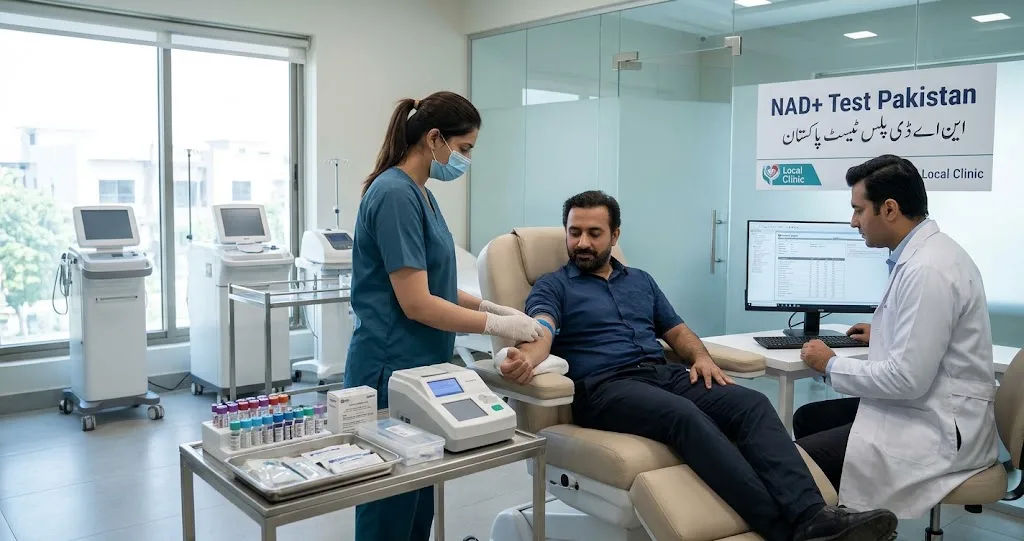 The answer depends on the laboratory, the testing method, and the specific NAD-related measurement being requested. Some tests use whole blood, while others may use plasma or serum. Specialized research methods can also measure NAD+ in isolated cells or particular tissues. These samples are not interchangeable because each one provides different information about the body's NAD+ levels.
Understanding the sample requirements before arranging a NAD+ test Pakistan can help you prepare correctly, avoid collection errors, and understand what your results actually mean. It is also important to know that NAD+ testing is a specialized area of laboratory analysis, and availability, sample handling procedures, and reporting methods may differ between providers in Pakistan.
This comprehensive guide explains the common sample types, how collection works, what happens after collection, and which questions you should ask a laboratory before booking a test.
NAD+ and Its Role in the Body
NAD+ stands for nicotinamide adenine dinucleotide. It is a coenzyme, which means it helps enzymes carry out important chemical reactions. NAD+ is present in cells throughout the body and supports many processes necessary for normal biological function.
One of its main responsibilities is helping convert nutrients from food into usable energy. During cellular respiration, NAD+ accepts electrons and becomes NADH. NADH can then contribute to the production of adenosine triphosphate (ATP), the molecule cells use for energy.
NAD+ also participates in processes associated with DNA repair, cellular signaling, and the activity of proteins called sirtuins. These functions have made it an important subject in research on aging, metabolism, and cellular health.
However, NAD+ levels can vary between tissues, cells, and individuals. A measurement obtained from blood does not necessarily represent the NAD+ concentration in every organ. This distinction is essential when interpreting a laboratory report.
What Is an NAD+ Test?
An NAD+ test is a laboratory analysis designed to measure NAD+ concentration in a biological sample. Depending on the laboratory's test panel, it may measure NAD+ alone or assess related compounds, such as NADH, the reduced form of NAD+.
Some panels measure additional metabolites involved in the body's NAD-related pathways. These expanded panels may provide more information than a single NAD+ measurement, but their usefulness depends on the purpose of testing and the quality of the method.
NAD+ testing is not the same as a routine blood count or a standard vitamin test. It generally requires a specialized analytical method, appropriate sample preparation, and procedures that protect the substance from degradation.
Why Do People Consider NAD+ Testing?
People may seek NAD+ testing because they are interested in energy metabolism, healthy aging, or changes in cellular function. Researchers may also measure NAD+ when studying metabolic disorders, cellular stress, and the effects of nutritional or other interventions.
Nevertheless, low energy, fatigue, or difficulty concentrating cannot be diagnosed as NAD+ deficiency based on symptoms alone. These complaints have many possible causes, and a blood NAD+ result may not identify the underlying reason.
Before arranging testing, it is sensible to discuss the purpose with a qualified healthcare professional and determine whether the result is likely to change any decisions about care.
Which Sample Is Used for NAD+ Testing?
The most common sample for measuring cellular NAD+ levels is whole blood. However, the correct sample depends on the specific test method used by the laboratory.
For example, a laboratory using a whole-blood NAD assay may require blood collected in a tube containing an anticoagulant. Another laboratory may use a specially prepared dried blood spot. Some research procedures measure NAD+ in isolated blood cells or tissue samples.
According to NADMED's published testing instructions, its blood assay is designed for whole blood rather than plasma or serum. Research also supports the importance of selecting the appropriate sample because NAD+ and related compounds can be distributed differently across biological materials.
1. Whole Blood
Whole blood contains the liquid portion of blood, called plasma, along with red blood cells, white blood cells, and platelets. It is commonly used for NAD+ analysis because much of the body's blood-associated NAD+ is located inside cells.
For a whole-blood assay, the laboratory generally collects blood into a suitable tube containing an anticoagulant. This prevents clotting and helps preserve the sample in a form appropriate for analysis.
The amount required depends on the laboratory's validated procedure. For example, NADMED recommends approximately 150–200 microliters for its blood measurement method, although other assays may need different amounts.
When arranging a NAD+ test Pakistan, ask whether the laboratory measures NAD+ directly in whole blood or sends the sample to a specialized testing facility. This distinction helps clarify how the sample will be processed and where the analysis will take place.
2. Plasma
Plasma is the liquid portion of blood collected using an anticoagulant and separated from blood cells, usually through centrifugation. It contains water, proteins, electrolytes, hormones, and other dissolved substances.
Plasma can be suitable for certain specialized investigations of extracellular NAD+, meaning NAD+ found outside cells. However, it is not suitable for every NAD+ measurement.
For example, NADMED states that plasma is unsuitable for its whole-blood NAD assay. Research also indicates that intracellular NAD+ and related metabolites may be undetectable or present at very low levels in plasma under particular analytical conditions.
Therefore, patients should not assume that every blood sample can be used for every NAD+ test. The laboratory must confirm that its method is validated for the requested sample type.
3. Serum
Serum is the liquid remaining after blood has clotted and the clot has been removed. It differs from plasma because clotting changes the sample's composition and removes certain components from the liquid portion.
Serum may be used in research examining extracellular NAD+ or its breakdown products. However, it is generally not the preferred sample for methods designed to measure intracellular NAD+ in whole blood.
The distinction matters because a serum result cannot automatically be compared with a result obtained from whole blood. Differences may reflect the sample itself, the testing method, or the biological material being measured rather than a genuine change in a person's overall NAD+ status.
Before booking a NAD+ test Pakistan, confirm the exact specimen name written in the laboratory's instructions. A general statement such as "blood sample required" may not provide enough information.
4. Dried Blood Spot Samples
A dried blood spot test uses a small drop of blood placed on specially designed filter paper. The blood dries under controlled conditions, and the card is then prepared for laboratory analysis.
This approach may make collection and transportation easier because it can require less blood than a conventional blood draw. Researchers have investigated dried blood spot methods specifically for measuring NAD+ and related compounds.
One published study found that an appropriately selected dried blood spot card could help maintain NAD+ stability under the tested storage conditions. However, performance depends on the card, the analytical method, and how the sample is collected and stored.
Not every laboratory offers this method, and an ordinary paper card cannot replace a validated collection device. If a provider offers dried blood spot testing in Pakistan, ask which collection kit is used and whether the test has been validated for NAD+ measurement.
5. Isolated Cells and Tissue Samples
Some specialized investigations measure NAD+ in particular cell populations, such as red blood cells or peripheral blood mononuclear cells. Researchers may also study tissue samples to investigate NAD+ levels in a specific biological location.
These approaches can answer different questions from a whole-blood test. For example, analyzing a selected cell population may help researchers examine changes within that population without combining the results from all blood components.
Tissue analysis is generally more specialized and may involve procedures that are not necessary for routine blood-based testing. Such samples are mainly relevant to research or specific clinical investigations rather than ordinary wellness screening.
How Is the NAD+ Blood Sample Collected?
The collection process is usually straightforward for the patient, but the laboratory must follow the correct technical procedure to obtain a useful result.
For a conventional whole-blood NAD+ test Pakistan, collection generally involves the following steps.
Step 1: Confirm the Required Test
The laboratory should identify the precise NAD-related measurement requested. A test measuring NAD+ alone may have different requirements from one measuring NAD+, NADH, and other metabolites.
Confirm the sample type, collection tube, required volume, and any preparation instructions before visiting the collection centre.
Step 2: Collect the Blood Sample
A trained phlebotomist typically collects blood from a vein using a sterile needle and an appropriate collection tube.
The tube may contain an anticoagulant, such as EDTA or lithium heparin, depending on the assay. The laboratory must specify which one is acceptable because different methods may require different collection conditions.
Step 3: Label the Sample Correctly
The sample must be labelled with the appropriate patient identifiers and collection information according to the laboratory's procedures.
Correct labelling helps prevent mix-ups and allows the laboratory to connect the result with the right patient. Collection time can also be important when the testing protocol requires consistent timing.
Step 4: Handle the Sample Properly
NAD+ is sensitive to conditions after collection. Enzymatic activity and chemical changes may affect the amount measured if the sample is not processed appropriately.
For this reason, a laboratory may specify refrigeration, rapid freezing, extraction, or other preservation steps. The exact procedure depends on the assay, so patients should not freeze, refrigerate, or transport a sample independently unless the laboratory has provided instructions.
Studies have demonstrated that NAD+ can degrade in blood under unsuitable handling conditions, making pre-analytical control an important part of reliable measurement.
Step 5: Laboratory Analysis
Once the sample reaches the testing facility, trained laboratory staff prepare it for analysis. Depending on the method, measurement may use an enzymatic assay or an analytical technique such as liquid chromatography coupled with mass spectrometry.
The method selected determines how the target compounds are separated, detected, and quantified. The laboratory then reports the result in the units appropriate for its assay.
Does NAD+ Testing Require Fasting?
Fasting requirements depend on the laboratory's protocol and the purpose of testing.
Some whole-blood NADMED procedures state that fasting is not required. However, this instruction should not automatically be applied to every NAD+ assay or to other blood tests ordered at the same time.
If the test is part of a larger panel that includes glucose or other measurements requiring fasting, the laboratory may provide different instructions.
For a NAD+ test Pakistan, contact the provider before your appointment and ask whether you should avoid food, caffeine, supplements, or strenuous exercise. Do not stop prescribed medication or medically necessary supplements without advice from your healthcare professional.
Consistency can also matter when comparing measurements taken on different dates. Following the same collection and preparation instructions helps reduce avoidable differences between results.
Why Is Proper Sample Handling So Important?
The accuracy of an NAD+ measurement depends on more than collecting blood. The sample must remain suitable for the laboratory's chosen analytical method from collection through testing.
NAD+ and NADH can change after blood collection. If the sample remains under unsuitable conditions, the measured concentration may differ from the concentration present at the time of collection.
Several factors can influence the result:
-
Collection tube: The anticoagulant must be compatible with the assay.
-
Processing time: Delays may affect the stability of NAD+ and related compounds.
-
Temperature: Samples may require refrigeration or freezing according to the laboratory's protocol.
-
Storage duration: The permitted storage period depends on the method and temperature.
-
Freeze-thaw cycles: Repeated freezing and thawing can affect sample integrity.
-
Laboratory technique: Extraction, calibration, and measurement procedures can influence the final result.
Research has highlighted the importance of controlling these factors when measuring NAD-related compounds in blood.
When choosing a NAD+ test Pakistan, ask the laboratory how it protects the sample and whether it follows a validated procedure. These questions are particularly important if your blood will be transported to another city or sent abroad for specialized analysis.
How Can You Prepare for NAD+ Testing?
Preparing for an NAD+ test does not necessarily require major changes to your daily routine. The most important step is to follow the collection centre's instructions.
Before Your Appointment
Contact the laboratory to confirm the test name, sample type, fasting requirements, collection time, and expected reporting period.
Tell your healthcare professional about any NAD-related supplements, nutritional products, or medications you use. This information may help when interpreting the result, particularly if you are investigating changes after starting a supplement.
Do not discontinue prescribed treatment simply to influence the test result.
On the Day of Collection
Follow the laboratory's instructions about food, drinks, and activity. If you are having additional blood tests, check whether those tests require fasting.
Make sure the collection staff know which NAD-related test has been ordered. Similar-sounding tests may use different analytical methods and specimen requirements.
After Collection
Ask whether the sample will be processed at the collection centre or transported to a specialized laboratory.
You generally do not need to take special precautions after a routine blood draw beyond the collection centre's standard advice. If you experience unusual bleeding, increasing swelling, or significant pain at the puncture site, seek appropriate medical advice.
How Should You Understand Your NAD+ Test Results?
An NAD+ result should be interpreted in the context of the specific sample, assay, and laboratory reference information.
For example, a whole-blood NAD+ measurement reflects the combined material included in that specimen. A result from isolated cells reflects a different biological compartment. Values obtained through different methods may not be directly comparable.
Your report should ideally identify the measured compound, specimen type, units, analytical method, and any applicable reference interval.
What Does a Low NAD+ Result Mean?
A low result may indicate that the measured concentration is below the laboratory's expected range. However, it does not automatically establish a disease, prove that you have a nutritional deficiency, or explain symptoms such as fatigue.
The significance depends on the reliability of the assay, the sample handling process, the person's clinical circumstances, and the evidence supporting the laboratory's reference range.
Can a High NAD+ Result Guarantee Better Health?
No. A higher measured concentration does not necessarily mean that a person is healthier, younger, or producing more energy throughout the body.
NAD+ is involved in several biological pathways, and a single blood measurement cannot fully describe how these pathways function in every tissue. There is also no single universal blood NAD+ target that can independently establish optimal health or longevity.
A qualified healthcare professional can help determine whether the result is meaningful and whether further evaluation is appropriate.
How to Choose an NAD+ Testing Laboratory in Pakistan
Finding a provider requires checking more than the advertised test name. Because NAD+ analysis is specialized, it is important to understand exactly what the service includes.
Consider the following points before arranging a NAD+ test Pakistan.
1. Confirm the exact test offered. Ask whether the laboratory measures NAD+ alone or provides a broader panel that includes NADH and other metabolites.
2. Check the sample requirements. Confirm whether the test uses whole blood, a dried blood spot, plasma, or another specimen.
3. Ask about laboratory accreditation. Find out whether the testing facility has appropriate accreditation or documented quality assurance for the method being used.
4. Understand sample transportation. If the analysis takes place outside Pakistan, ask how the sample will be preserved, transported, and accepted by the receiving laboratory.
5. Request clear reporting information. Ask about the units, reference intervals, analytical method, and estimated turnaround time.
6. Understand the cost. Confirm whether the quoted fee includes collection, specialized processing, transportation, and reporting.
Do not assume that every diagnostic centre offers a validated NAD+ assay simply because it provides routine blood testing. Availability should be confirmed directly with the provider.
Conclusion
The sample used for NAD+ testing depends on the laboratory's analytical method and the biological information the test is intended to measure. Whole blood is a common choice for assessing blood-associated cellular NAD+, while plasma, serum, dried blood spots, isolated cells, and tissue samples may be suitable for particular methods or research purposes.
For anyone considering a NAD+ test Pakistan, understanding the specimen requirements is an important first step. Whole blood is often appropriate because NAD+ is present inside blood cells, but it must be collected and handled correctly. Plasma and serum should not be treated as interchangeable alternatives when the assay has been designed specifically for whole blood.
Proper sample collection, suitable storage, timely processing, and a validated analytical method all contribute to reliable results. Even a carefully performed test has limitations, and the result should not be interpreted as a complete measure of cellular health, biological aging, or overall energy production.
Before booking, ask the laboratory which sample it requires, how the sample will be preserved, where the analysis will take place, and how the findings will be reported. Discuss the result with a qualified healthcare professional if you are investigating symptoms or considering changes to your health routine.
Ultimately, the most useful NAD+ test Pakistan is not simply the one that provides a number. It is the one that uses an appropriate specimen, follows a reliable testing procedure, and produces information that can be interpreted responsibly in the context of your health.

Leave a Reply