

Creating effective learning content often requires more than strong writing or attractive visuals. Subject matter experts, commonly called SMEs, bring deep knowledge of a specific topic, while an instructional design company brings the learning strategy, structure, and development skills needed to turn that knowledge into useful training.
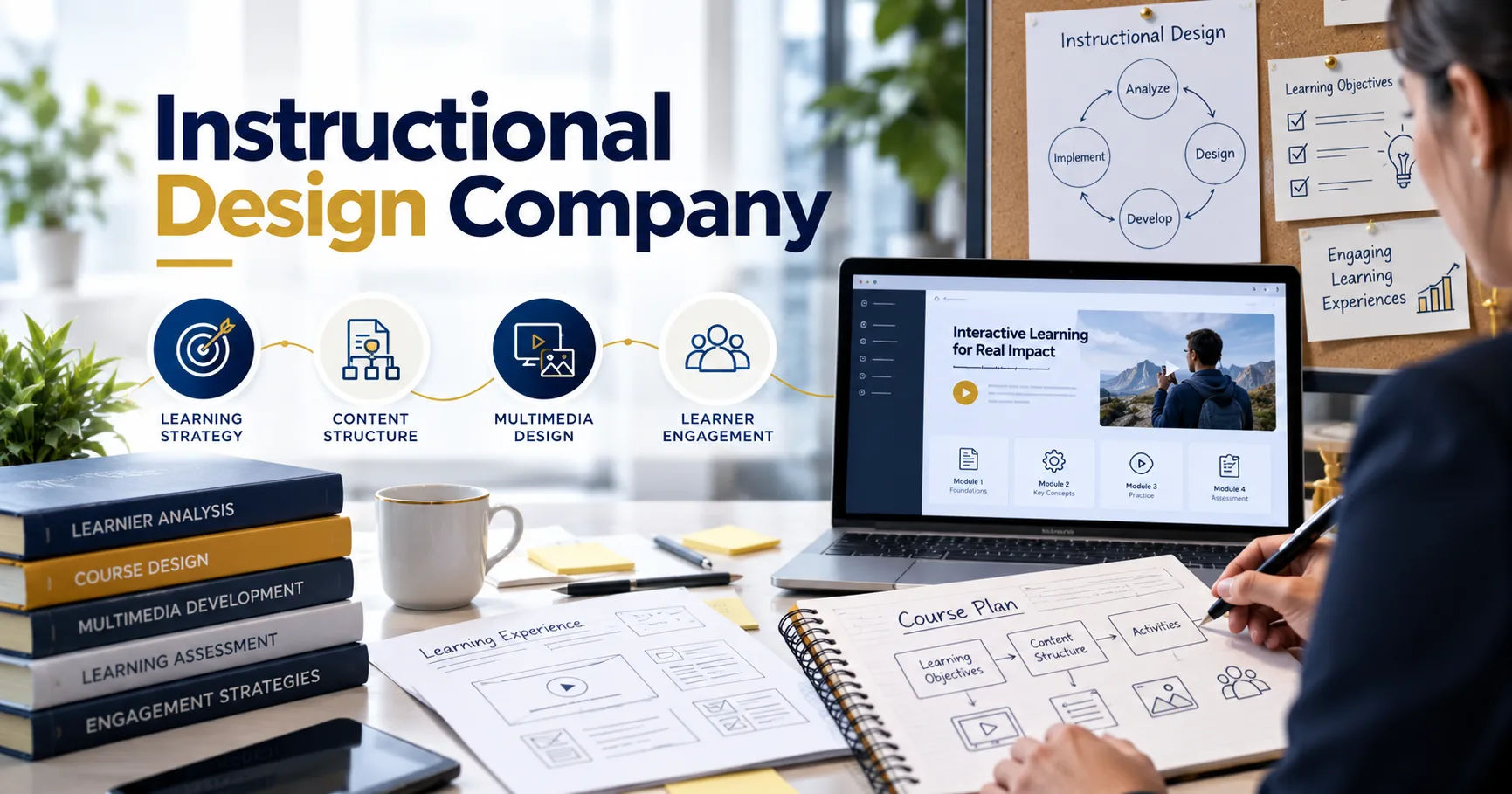
The partnership between instructional designers and SMEs is essential for producing courses that are accurate, engaging, and easy for learners to understand. SMEs know what learners need to know from a professional or technical perspective, while instructional designers understand how people learn and how to present information effectively.
When these two roles work together properly, complex information can be transformed into clear lessons, practical activities, assessments, videos, simulations, and other learning experiences.
What Is a Subject Matter Expert?
A subject matter expert is a person with specialized knowledge or experience in a particular field. An SME might be a software engineer, doctor, financial professional, safety officer, teacher, manager, technician, or industry specialist.
SMEs usually understand the subject extremely well because they work with it regularly. They may know industry standards, company procedures, technical details, common mistakes, and real-world situations that learners need to understand.
However, being an expert in a subject does not necessarily mean being an expert in teaching that subject.
An SME may explain a complicated process using professional terminology that makes sense to experienced colleagues but confuses beginners. This is where instructional designers become valuable.
What Does an Instructional Design Company Do?
An instructional design company helps organizations create structured learning experiences. Its work can include e-learning courses, employee training, onboarding programs, compliance training, educational content, assessments, simulations, instructor-led materials, and other learning solutions.
The company focuses on questions such as:
- Who are the learners?
- What should they be able to do after training?
- What information is essential?
- How should the information be organized?
- What activities will help learners practice?
- How should learning be assessed?
- Which delivery format will work best?
The SME provides subject expertise, while the instructional design team turns that expertise into a learning experience.
Why SMEs and Instructional Designers Need Each Other
The relationship works because each side brings different strengths.
An SME understands the subject. They can identify important facts, explain professional processes, provide examples, and verify technical accuracy.
An instructional designer understands learning. They can determine how much information learners can reasonably process, organize content into logical sections, create learning objectives, and select appropriate instructional methods.
For example, imagine a company needs training about workplace cybersecurity. A cybersecurity specialist may understand threats, password policies, phishing attacks, and security procedures in great detail.
An instructional designer can take that knowledge and create short lessons, realistic scenarios, interactive questions, and assessments that help employees apply the information.
Together, they create training that is both accurate and teachable.
The SME Collaboration Process
Although every project is different, an instructional design company typically follows a structured process when working with SMEs.
1. Project Discovery
The first stage is understanding the training requirement.
The instructional design team meets with project stakeholders and SMEs to discuss the purpose of the course. They may ask about the target audience, business goals, existing materials, deadlines, technology requirements, and expected outcomes.
The team also identifies what the SME is responsible for providing.
This early conversation helps prevent confusion later in the project.
Identifying the Target Audience
The audience has a major effect on course design.
Training for experienced professionals may use more advanced terminology and realistic workplace scenarios. Training for new employees may require basic explanations and additional examples.
The SME helps explain the learners' professional context, while the instructional designer considers their learning needs.
2. Gathering SME Knowledge
Once the project requirements are clear, the instructional design team gathers information from the SME.
This can happen through interviews, meetings, questionnaires, workshops, existing documents, presentations, recordings, or demonstrations.
The goal is not simply to collect as much information as possible. The goal is to identify the information learners actually need.
SMEs often have years of knowledge and may naturally want to include everything. An instructional designer helps separate essential knowledge from information that can be removed, shortened, or provided as optional material.
3. Conducting SME Interviews
Interviews are one of the most useful collaboration methods.
An instructional designer may ask the SME to explain a process step by step. They may also ask questions such as:
“What mistakes do beginners commonly make?”
“What should employees do in this situation?”
“Which concepts are most difficult to understand?”
“What happens if this procedure is not followed?”
These questions help uncover practical knowledge that may not appear in official documents.
Turning Expertise Into Learning Content
SMEs often explain topics naturally from an expert's perspective. Instructional designers then reorganize those explanations from the learner's perspective.
For example, an SME might explain five related technical concepts in one long discussion.
The instructional designer may turn them into five short lessons, each with an objective, explanation, example, practice activity, and knowledge check.
This makes the content easier to follow without changing its essential meaning.
4. Defining Learning Objectives
Learning objectives describe what learners should be able to do after completing the training.
They provide direction for the entire course.
An SME can identify the professional skills that matter, while the instructional designer helps write objectives that are clear and measurable.
Instead of saying:
“Understand workplace safety.”
A stronger objective might be:
“Identify three common workplace hazards and select the appropriate response for each situation.”
The second objective gives the learner and instructor something specific to measure.
5. Creating a Course Outline
After gathering and organizing information, the instructional design team creates a course outline or storyboard structure.
The outline may show:
- Course introduction
- Learning objectives
- Main topics
- Examples
- Activities
- Knowledge checks
- Assessments
- Summary
- Additional resources
The SME reviews the outline to make sure important subject areas have not been overlooked.
This stage is especially useful because changes are easier to make before the full course is developed.
6. Developing the Storyboard
A storyboard provides a detailed plan for the final learning experience.
It can include narration, on-screen text, visuals, interactions, questions, animations, and instructions for developers.
For example, an SME might provide the technical explanation of how a machine operates. The instructional designer may recommend showing the process through an animation instead of presenting several paragraphs of text.
The SME checks whether the explanation remains technically accurate.
The instructional designer checks whether the presentation is understandable and supports the learning objective.
7. SME Review and Feedback
SME review is a critical part of the process.
The SME checks factual accuracy, terminology, procedures, examples, statistics, and technical details.
However, SME review works best when responsibilities are clearly defined.
The SME should focus primarily on subject accuracy rather than rewriting the entire course according to personal preferences.
For example, an SME may correctly point out that a procedure is inaccurate. The instructional designer can then decide how to communicate the corrected procedure in a way that remains clear for learners.
Managing Conflicting Feedback
Sometimes SMEs disagree with instructional designers about how content should be presented.
An SME might want to include a detailed explanation because it is technically important. The instructional designer might believe the information is too advanced for the target audience.
The solution is to return to the learning objective.
If the information is essential for achieving the objective, it should remain. If it is useful but not essential, it might be shortened or moved into additional resources.
This approach keeps the project focused on learner needs rather than personal preferences.
8. Development and Production
After the storyboard is approved, the development team creates the actual course.
Depending on the project, this may involve authoring tools, animation, video, narration, graphics, interactive activities, simulations, or learning management system integration.
The SME may continue to provide clarification during development.
For example, a developer may discover that a technical process is difficult to represent visually. The SME can explain the process in more detail, while the instructional designer determines how to simplify the explanation without losing accuracy.
9. Testing the Learning Experience
Before launch, the completed course should be tested.
The instructional design company may conduct quality assurance checks for navigation, links, audio, video, animations, assessments, and accessibility.
The SME performs another important review by checking whether the final product accurately represents the subject.
Testing can also reveal instructional problems.
For example, learners might be asked to answer a question about information that was never clearly explained. The team can identify this issue and revise the lesson before launch.
10. Final Approval and Launch
Once the content passes quality checks and receives the necessary approvals, it can be published.
For digital learning, the course may be uploaded to a learning management system.
The SME may remain involved after launch, especially if the subject changes regularly.
Industries such as healthcare, technology, finance, cybersecurity, and compliance often require content to be reviewed periodically.
Common Challenges in SME Collaboration
Working with SMEs can be highly productive, but it can also create challenges.
Too Much Information
Experts often know more than learners need to know.
An SME may provide hundreds of pages of documentation when learners only need the most important concepts and procedures.
The instructional designer helps prioritize the information.
Limited SME Availability
SMEs are often busy with their primary responsibilities.
They may have limited time for meetings and reviews.
To manage this issue, an instructional design company can prepare focused questions, establish deadlines, and use structured review documents.
Technical Language
SMEs may naturally use specialized terminology.
Technical language is sometimes necessary, but excessive jargon can make training difficult for beginners.
Instructional designers can simplify explanations while preserving important technical terms.
Changing Requirements
Projects sometimes change after development begins.
A new policy may be introduced, a process may change, or stakeholders may request additional content.
Clear communication between the SME and instructional design team helps manage these changes without creating unnecessary delays.
Best Practices for Working With SMEs
Establish Clear Roles
Everyone should understand their responsibilities from the beginning.
The SME provides subject expertise and validates accuracy.
The instructional designer manages learning strategy, structure, learner experience, and instructional effectiveness.
Developers and multimedia specialists handle production requirements.
Use Structured Review Cycles
Instead of asking an SME to review an entire course without guidance, divide the review into manageable stages.
For example, the SME can review the outline first, then the storyboard, and finally the developed course.
This reduces major changes late in the project.
Focus on Learner Needs
Every content decision should connect to the learner.
The central question should be:
“What does the learner need to know or do?”
This helps prevent the course from becoming a collection of information rather than a useful learning experience.
Keep Communication Simple
Clear communication is especially important when several people are involved.
A shared review document, project timeline, feedback process, and approval system can make collaboration much easier.
The Benefits of Effective SME Collaboration
When SMEs and instructional designers collaborate successfully, organizations can create training that combines accuracy with strong learning design.
Learners receive information that is relevant to their roles and presented in an accessible way.
Organizations can also reduce the risk of publishing incorrect information because SMEs participate in content validation.
Another benefit is consistency.
Instead of relying on one expert to explain a subject differently every time, the organization can develop standardized learning materials that employees can access repeatedly.
Building Long-Term Partnerships
The relationship does not have to end when one course is completed.
An organization can continue working with the same SME and instructional design team for future training projects.
Over time, the team develops a better understanding of the organization's terminology, learners, goals, and content requirements.
This can make future projects more efficient.
Conclusion
An instructional design company and a subject matter expert perform different but complementary roles in the development of effective training. The SME brings specialized knowledge, practical experience, and technical accuracy. The instructional design team brings expertise in learning strategy, course structure, communication, activities, assessments, and learner experience.
The collaboration usually begins with project discovery and SME interviews. It continues through content organization, learning objectives, storyboarding, development, review, testing, and final approval.
The most successful partnerships are built on clear responsibilities and regular communication. SMEs should have enough influence to protect subject accuracy, while instructional designers should have enough flexibility to organize that knowledge around the needs of learners.
The ultimate goal is not simply to transfer information from an expert to an audience. It is to transform expert knowledge into an experience that learners can understand, remember, and apply.
When both sides respect their areas of expertise and work toward the same learning objectives, the resulting training can be accurate, practical, engaging, and useful in real-world situations.

Leave a Reply